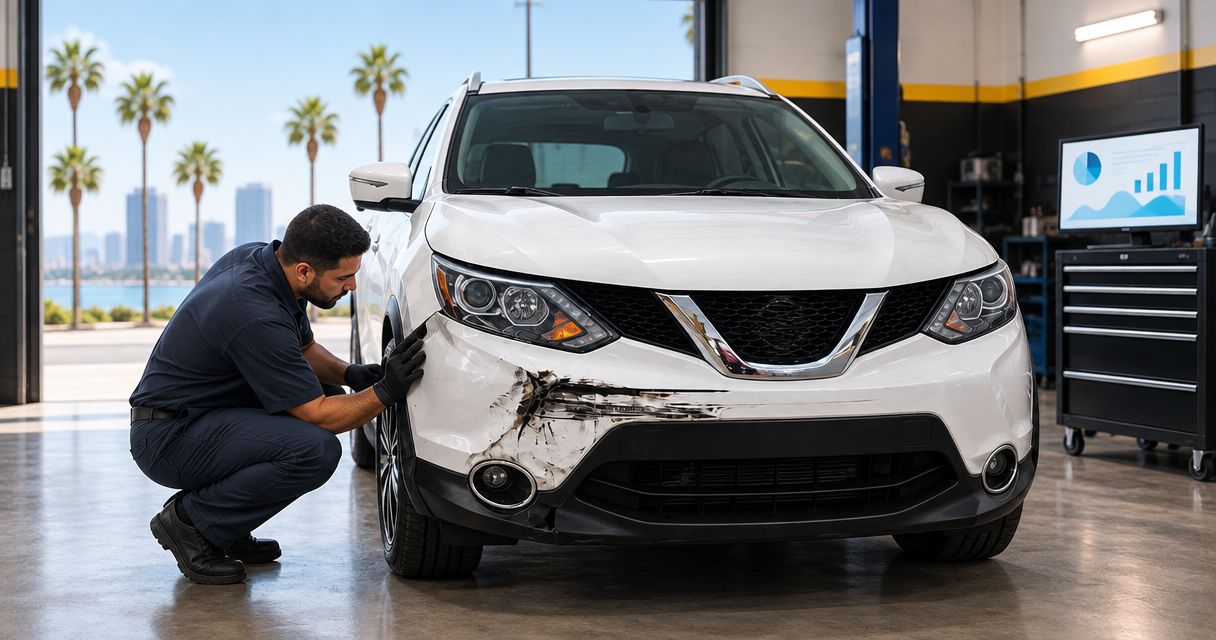
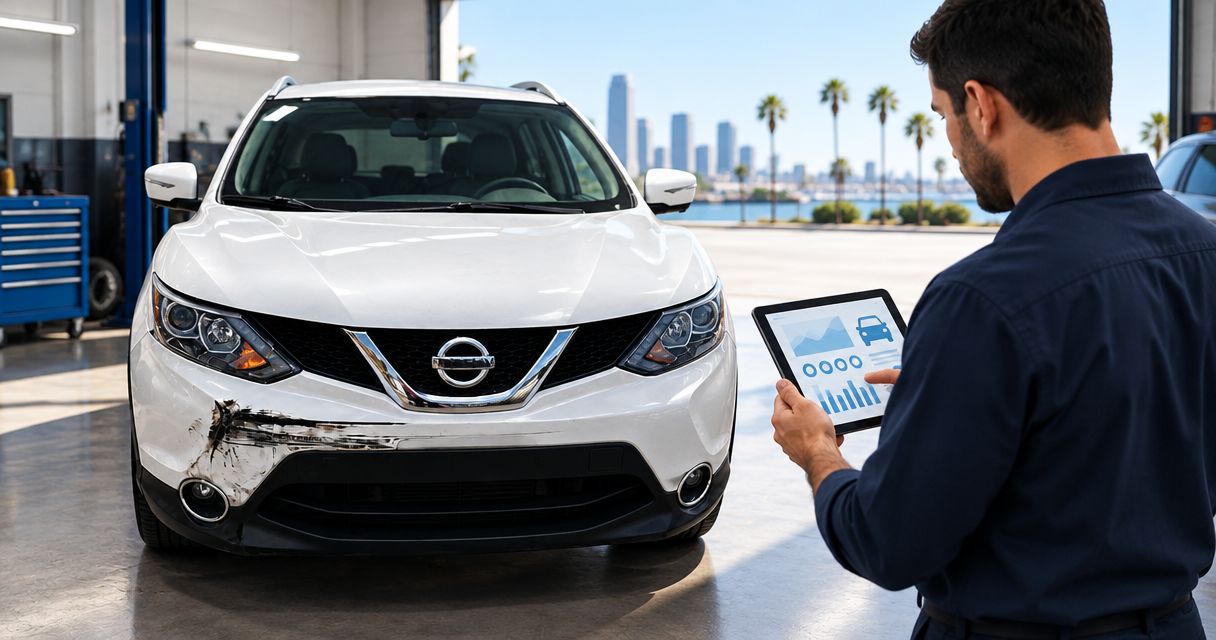
Compare Long Beach auto body shops by the repair work included, the clarity of the estimate, and who handles insurance questions—not just the total on the page. Ask each shop to explain additional damage, your deductible, transportation, and repair updates before you authorize work. For your 2026 comparison, use the same damage description and questions at every shop so you can spot meaningful differences.
- For an auto body shop Long Beach comparison, check repair scope before comparing estimate totals.
- Best Collision Center Long Beach handles collision repair and insurance claims; deductible assistance and free rental coordination depend on eligibility.
- Get deductible terms, transportation arrangements, and approval steps in writing before authorizing repairs.
- Self-pay and cosmetic body repairs deserve the same clear explanation as insurance-covered collision repair.
How do you compare auto body shops in Long Beach?
Compare what each shop will repair, what you must approve, and what you will pay yourself. A clear explanation matters more than a confident promise. Start your shortlist with shops that can discuss your specific damage and whether you plan to use insurance or pay directly.
Best Collision Center Long Beach handles auto collision repair and insurance claim handling. Apply the same questions below to every shop you consider.
- Describe the damage. Share the same photos, accident details, and concerns with each shop. Mention doors that do not close normally, warning lights, or changes you noticed after the collision.
- Compare repair scope. Ask which panels and operations the estimate includes. Identify anything that still requires inspection.
- Clarify claim handling. Find out who sends repair documentation to the insurer and who contacts you about disputed or additional work.
- Confirm your responsibility. Separate the deductible from work insurance has not approved and anything you request yourself.
- Check transportation. Ask who arranges the vehicle, what eligibility applies, and who pays expenses outside the arrangement.
- Set approval rules. Agree on how the shop will contact you before additional customer-paid work begins.
Use the answers to narrow your choice. If a shop leaves a question unanswered, resolve it before signing—not after your car is already being repaired.
Why this matters after an accident
You are choosing both a repair plan and a communication process. An estimate can look straightforward while leaving important questions about hidden damage, insurance payment, or transportation unresolved.
A useful 2026 shop comparison separates those questions instead of treating them as one promise. You should understand what the shop plans to do, what your insurer has agreed to cover, and what still needs your decision. That clarity reduces the chance of confusing a preliminary estimate with a final commitment.
You do not need to know body repair terminology. You need a shop that explains the work in language you can repeat back without guessing.
What should you compare on a written estimate?
An estimate is useful only when you understand its scope. Ask the shop to walk through the damaged areas and connect each proposed operation to the condition of your vehicle.
| Comparison point | What to ask | What the answer tells you |
|---|---|---|
| Damaged areas | Which panels and related areas are included? | Whether both estimates address the same damage |
| Repair approach | Are you proposing repair or replacement, and why? | How the shop plans to address each damaged part |
| Parts | What parts are proposed, and where are they identified? | What the estimate assumes about replacement components |
| Paint work | Which surfaces need refinishing or blending? | Whether the written scope explains the paint work |
| Further inspection | What cannot be confirmed until inspection or disassembly? | Which parts of the estimate remain preliminary |
| Additional work | How will changes be documented and approved? | What happens if the initial scope changes |
Do not assume a shorter estimate is better. It might describe a smaller scope, while a longer estimate might include work the other shop has not yet addressed. Ask about the difference rather than deciding from the total alone.
Keep each written estimate. If you discuss a change by phone, request an updated explanation so your comparison stays tied to the work actually proposed.
How should a shop explain insurance claim handling?
Ask who will communicate with your insurance company about the repair estimate. Then ask what the shop needs from you: claim information, accident photos, an adjuster's estimate, or permission to communicate about repairs.
A shop can explain and document repair needs; it cannot promise that an insurer will approve every item. Treat claim handling and claim approval as separate responsibilities.
Ask these questions before authorizing insurance-covered repairs:
- Who submits the repair estimate and supporting documentation?
- Who explains differences between the shop's estimate and the insurer's estimate?
- How will you hear about additional damage found during repairs?
- What happens if the insurer disputes part of the proposed work?
- Which decisions require your approval before the shop proceeds?
The practical advantage of shop involvement is having someone explain the repair work during the claim process. The limitation is that coverage decisions still depend on the claim and policy terms.
For a 2026 claim, keep the current estimate and relevant messages together. If an explanation changes, ask which document now reflects the proposed repair. You should not have to reconstruct the agreement from scattered calls and messages.
Should you use insurance or pay for body repair yourself?
Compare insurance-covered and self-pay repairs using the same written repair scope. The payment route changes the claim process, not your need to understand the work.
| Payment route | Best for | Practical advantage | Limitation to review |
|---|---|---|---|
| Insurance claim | Drivers seeking coverage for accident damage under an applicable policy | An approved claim can contribute toward covered repairs | Deductibles, coverage decisions, and disputed work need separate clarification |
| Self-pay repair | Drivers choosing to pay directly for collision or cosmetic body work | You can discuss the requested scope directly with the shop | You are responsible for the work you authorize without an insurance payment |
For insurance, ask your insurer what coverage applies and what deductible you would owe. For self-pay, ask the shop to explain the work needed and distinguish it from cosmetic work you are considering separately.
Smaller dents, scratches, and cosmetic body damage are valid reasons to request an estimate. Do not assume a shop is interested only in major insurance claims. Explain what bothers you and ask for a repair assessment.
If you are undecided, request an estimate before choosing a payment route. That gives you a specific repair plan to discuss rather than making a decision from the appearance of the damage alone.
What should you ask about deductible assistance?
Deductible assistance is a question to review, not a promise to assume. Ask whether you qualify, what the assistance covers, and what responsibility remains yours.
Best Collision Center Long Beach is best suited to Long Beach drivers seeking collision repair with insurance claim handling. Its deductible assistance and free rental car coordination are subject to eligibility; neither should be treated as automatic.
The potential benefit of deductible assistance is help with an eligible customer's out-of-pocket obligation. The limitation is that you need an individual review before relying on it.
Ask for the applicable terms in writing. Confirm whether an offer applies to your specific repair and claim, and whether anything must happen before eligibility is established.
Do not confuse assistance with insurance approval. Help with a deductible does not establish that every repair operation is covered, and it does not remove the need to understand additional customer-paid work.
How do you compare rental car arrangements?
Start with what you actually need. Tell the shop whether your vehicle is drivable, whether you need transportation during repairs, and whether you have already discussed rental coverage with your insurer.
Then separate coordination, eligibility, and payment. Someone arranging a rental does not, by itself, tell you which expenses are covered or how long the arrangement applies.
Ask:
- Who makes the rental arrangements?
- What must be confirmed before you can rely on the arrangement?
- Who explains the rental agreement and any customer responsibilities?
- What happens if the repair schedule changes?
- Who should you contact if transportation becomes a problem?
The benefit of coordination is help organizing transportation while your vehicle is being repaired. The limitation is that the terms still need confirmation for your situation.
For your 2026 repair, keep the transportation explanation alongside the repair estimate. Check both before drop-off so a change in one does not leave the other unclear.
What happens when a shop finds additional damage?
Collision damage is not always fully visible during an initial inspection. Ask how the shop handles damage discovered after a closer inspection or disassembly, especially if that changes the proposed work.
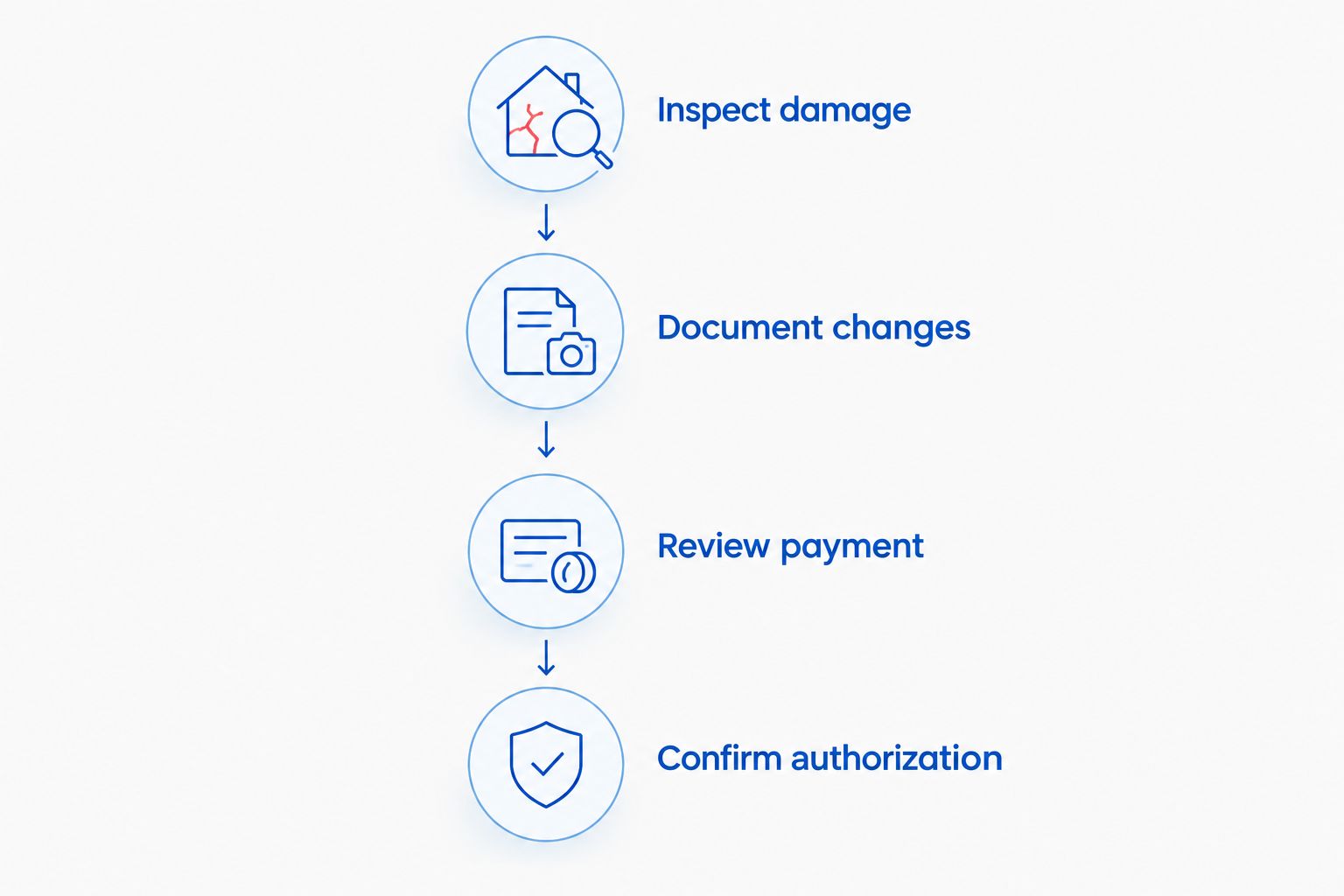
A clear process separates the repair finding from the payment decision. Use this sequence when you compare shops:
- Inspect damage. The shop identifies additional repair needs.
- Document changes. The shop explains how the proposed scope changes.
- Review payment. Insurance coverage and customer responsibility are clarified.
- Confirm authorization. You understand what requires your approval.
Ask how additional customer-paid work will be approved before it begins. Do not assume an insurer's review and your authorization are the same thing.
A useful answer names the contact person and communication method. It also explains how you will receive the revised scope, rather than simply saying the shop will handle everything.
Why auto body repair estimates vary
Different estimates can reflect different assumptions. Before choosing a shop in 2026, ask whether these factors explain the difference:
- Damage included: Estimates must cover the same areas to support a fair comparison.
- Repair or replacement: Different proposed approaches need an explanation tied to the damaged part.
- Parts specified: Check whether the estimates propose the same replacement components.
- Paint scope: Refinishing and blending work should be identified rather than left implied.
- Inspection stage: A preliminary assessment and an estimate after closer inspection are not the same starting point.
- Payment responsibility: Separate the repair scope from what insurance has approved and what you must pay.
A difference is a reason to ask questions, not proof that either shop is wrong. Request an explanation tied to the written estimate.
Should you choose the shop with the lowest estimate?
Choose the clearest appropriate repair scope, not automatically the lowest estimate. First confirm that the estimates address the same damage, proposed parts, and paint work. Then compare what remains uncertain and how changes will be approved.
An estimate that excludes unresolved work is not a firm answer about your final responsibility. Ask the shop to identify those uncertainties plainly.
Can you request an estimate for small cosmetic damage?
Yes, you can request a body repair estimate for smaller or cosmetic damage. Describe the dent, scratch, or damaged panel and explain whether you want to pay directly or discuss insurance.
Ask what the proposed work addresses and whether any inspection is needed before the scope is clear. You deserve the same calm explanation whether the repair involves a small area or collision damage across several panels.
What should you confirm before dropping off your car?
Confirm the repair scope, payment responsibility, and approval process before drop-off. Also establish your contact person, how updates will arrive, and what transportation arrangement has actually been confirmed.
Ask which circumstances would change the expected repair schedule. A stated completion date is easier to assess when you understand what still depends on inspection, claim review, or the agreed repair work.
FAQ
What's the best way to compare auto body shops in Long Beach?
Compare written repair scope, insurance communication, your payment responsibility, and the process for approving changes. Use the same damage description at every shop so you are comparing equivalent work.
Is the cheapest body shop estimate the best choice?
The cheapest estimate is not automatically the best choice. Check whether it includes the same damaged areas, proposed parts, paint work, and unresolved inspection needs as the other estimates.
Can an auto body shop guarantee insurance approval?
An auto body shop cannot guarantee that your insurer will approve every repair item. Ask how the shop documents repair needs and communicates about disputed or additional work.
Does every customer qualify for deductible assistance?
Not every customer qualifies for deductible assistance. Best Collision Center Long Beach reviews eligibility, so ask what applies to your repair before relying on assistance.
Will a free rental car automatically cover my whole repair?
Do not assume a free rental arrangement applies automatically or covers your entire repair. Confirm eligibility, the applicable period, and any customer responsibilities before making transportation plans.
Can I pay for cosmetic body repair without using insurance?
Yes, you can request a self-pay estimate for cosmetic body repair. Ask the shop to explain the scope and obtain your approval before additional customer-paid work begins.
What should I bring when requesting a collision repair estimate?
Bring your damage photos, a description of the accident and vehicle concerns, and any existing repair or insurance estimate. If you have opened a claim, have the claim information available for the discussion.
One last thing
Ask the shop to explain what happens if the repair plan changes. That answer connects the estimate, insurance process, and your out-of-pocket responsibility more clearly than a general promise to take care of everything.
Before authorizing work, write down the questions that remain open. Ask who will answer them and what needs confirmation before repairs proceed. You do not have to decide while those details are unclear.
Best Collision Center Long Beach welcomes insurance-covered collision repair and self-pay body repair enquiries, including cosmetic damage. Request an estimate or call for an insurance claim review, and ask whether deductible assistance and free rental car coordination apply to your situation.