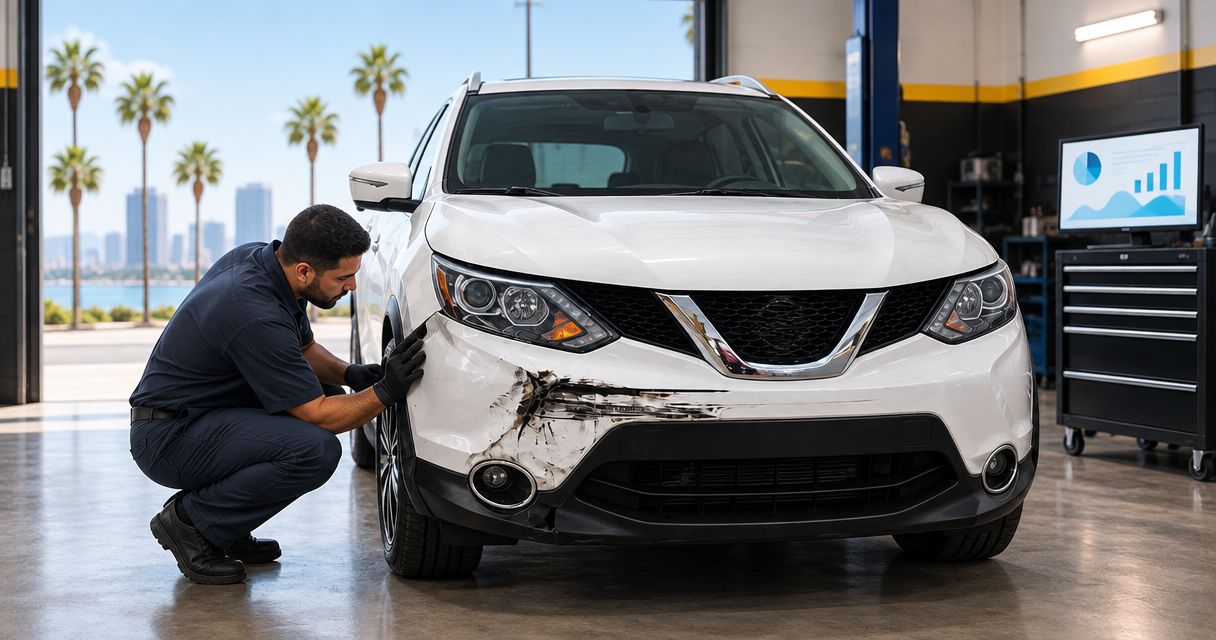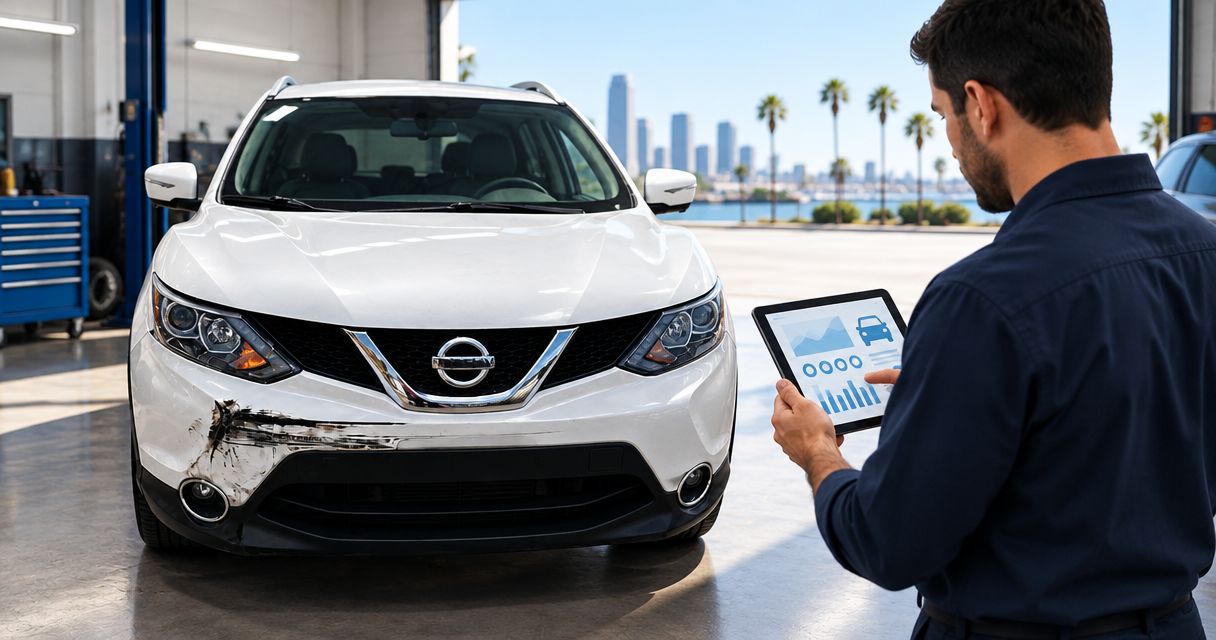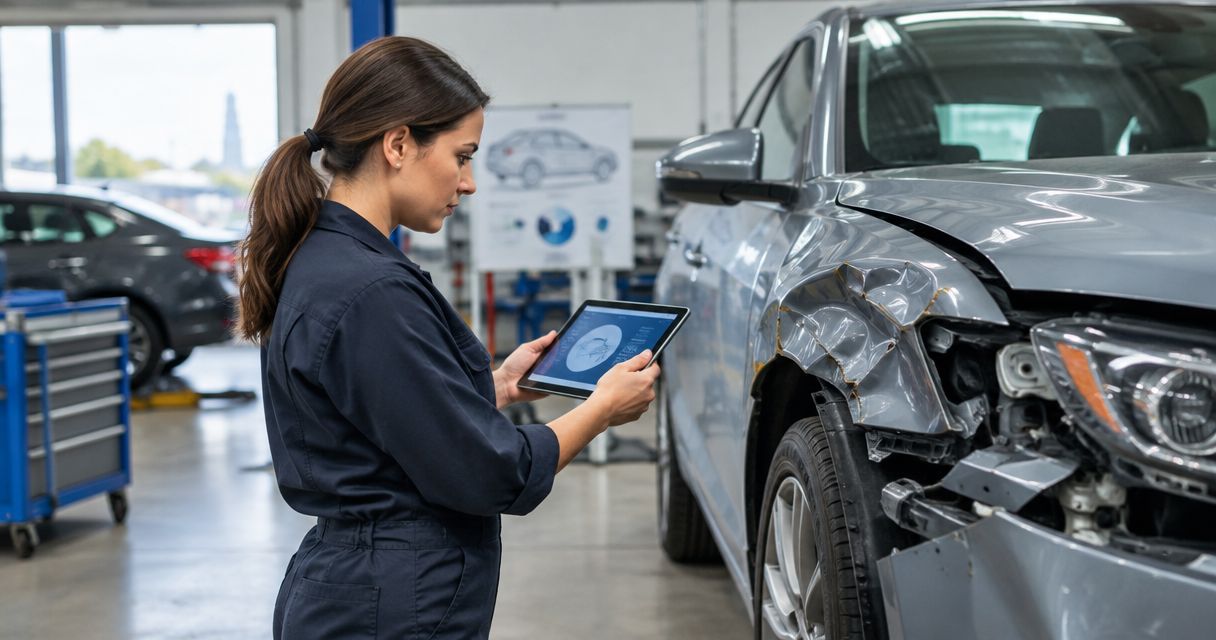
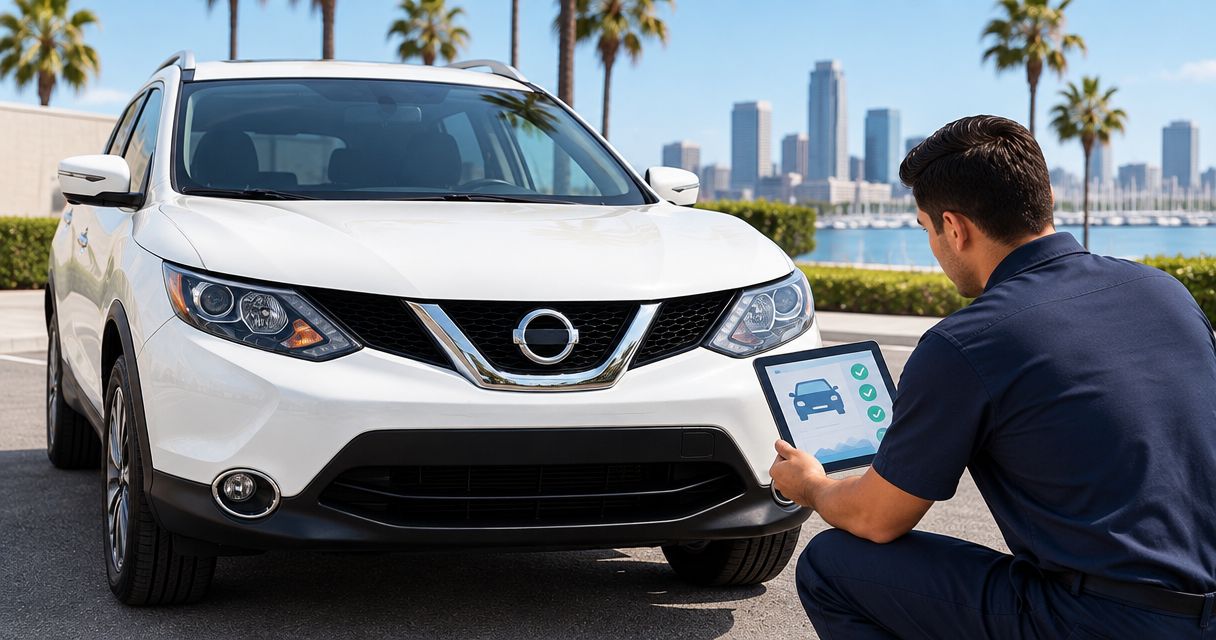
After auto body repair in Long Beach, check the repaired panels, paint finish, doors, lights, dashboard warnings, and repair paperwork before you leave the shop. For your 2026 pickup, compare the finished work with the written repair scope, ask about any unresolved concern, and do not drive a vehicle that shows a safety problem.
- For auto body repair Long Beach pickups, check the finished work against the written repair scope before leaving.
- Inspect paint and panel fit in daylight; a clean exterior alone does not confirm a complete repair.
- Ask for the final invoice and any inspection or calibration records relevant to your repair.
- Best Collision Center Long Beach handles collision repair and insurance claims; assistance and free rental cars depend on eligibility.
What should you check after auto body repair in Long Beach?
Check both the vehicle and the paperwork. Your pickup inspection should confirm that the agreed work is complete, the repaired areas look and function properly, and the shop has explained any remaining issue. Looking over the paint is only part of that job.
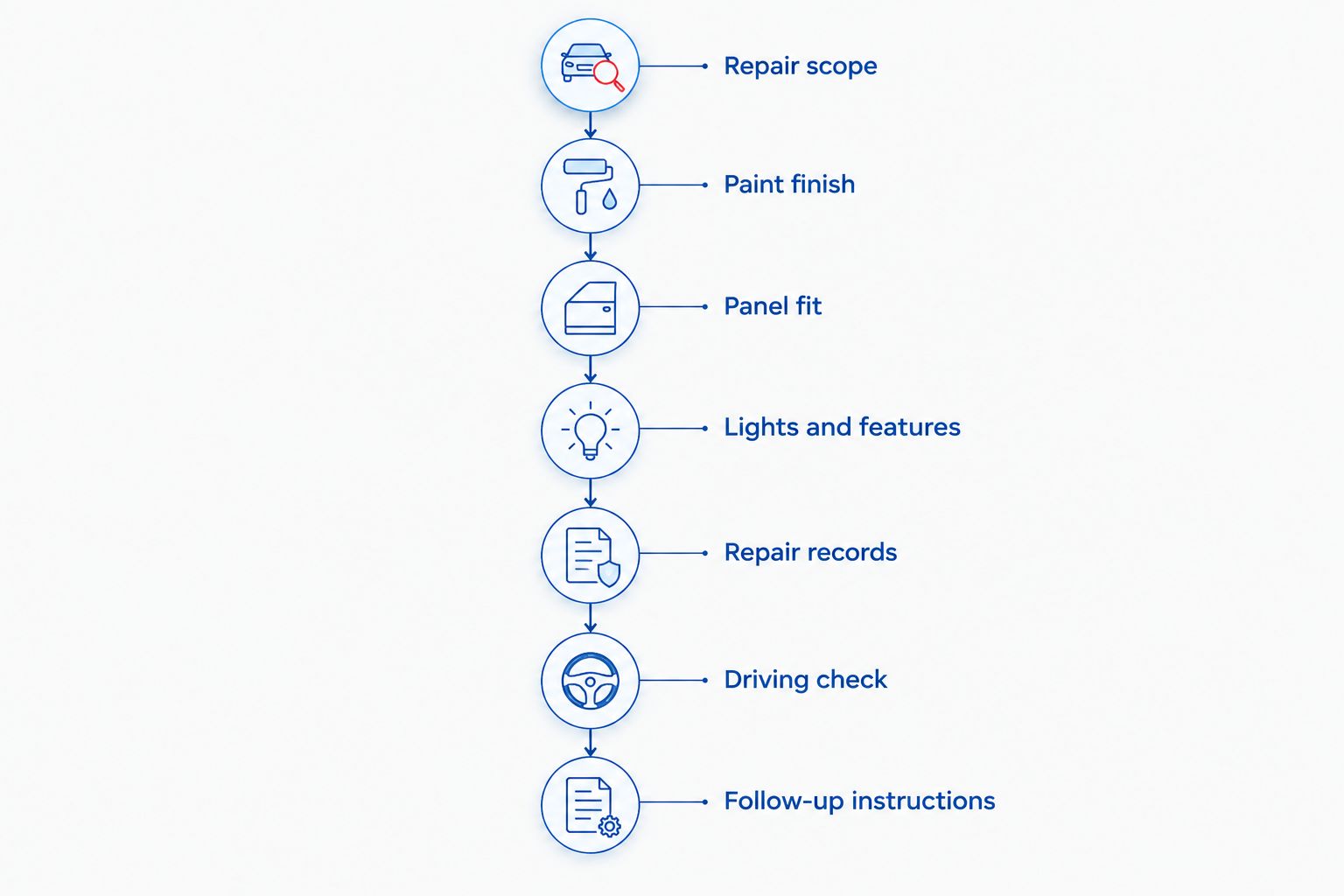
Use these 7 pickup checks for your 2026 repair. Start with the parked vehicle, review the documents, and discuss driving checks with the shop only after visible safety concerns have been addressed.
1. Match the finished work to the repair scope
Bring the estimate or repair authorization and ask the shop to walk through each repaired area. Confirm which panels were repaired, which parts were replaced, and whether the scope changed after disassembly. Collision damage can extend beyond what was visible in the first estimate.
Compare the final invoice with that explanation. A changed scope needs a clear reason, not a surprise at the counter.
- Identify the areas included in the repair.
- Ask about additional damage discovered during the work.
- Separate completed work from damage that was not included.
- Ask whether any item remains unfinished.
Do not assume an unrelated scratch was included. If you want additional cosmetic work, ask for a separate explanation of the scope before authorizing it.
2. Look at the paint in daylight
Inspect the repaired area outside when conditions allow. Look straight at the panel, then view it from an angle and compare it with adjacent panels. Different lighting can make a mismatch or surface defect easier to see.
Check for obvious color differences, uneven texture, runs, dust trapped in the finish, and paint on nearby trim or glass. Point out anything that concerns you rather than deciding on your own whether it is acceptable.
Ask the shop to explain any visible difference and provide care instructions for the refinished area. Do not apply a generic washing or waxing schedule to fresh paint. Follow the instructions for the finish used on your vehicle.
3. Check panel fit and closures
Look at the gaps around repaired doors, the hood, trunk, bumper, and other affected panels. Compare nearby gaps and watch for a panel sitting noticeably higher or lower than its neighbor. Appearance alone does not establish whether the underlying repair is correct, but an obvious fit problem deserves an explanation.
Open and close the affected doors and compartments normally. Do not slam them to make them latch.
Check that handles, locks, windows, and seals work where the repair involved those areas. Report rubbing, unusual resistance, loose trim, or a closure that does not latch securely. A door or hood that will not stay closed is a reason to stop the pickup discussion and have the shop address it.
4. Test lights and affected features
Ask the shop to help check headlights, turn signals, brake lights, and other lights near the repaired area. Inspect lenses for damage and confirm that the relevant lights operate. A repaired bumper or fender can look finished while a nearby component still needs attention.
Check mirrors, windows, locks, cameras, and parking sensors when those features were affected by the collision or repair. Describe any new behavior clearly: a camera image that looks different, a sensor warning, or a window that no longer moves normally.
A feature turning on does not prove that every required procedure is complete. Ask how the shop verified the affected systems and whether the vehicle manufacturer required additional checks.
5. Review warnings and repair records
Start the vehicle with the shop present and check for warning messages that remain on. Identify new warnings and any warnings that existed before the repair. Do not accept an unexplained safety warning as a normal part of pickup.
Ask whether diagnostic checks, wheel alignment, or driver-assistance calibration applied to the work performed. These procedures depend on the vehicle and the repair; they are not automatically required for every cosmetic job.
Request the relevant records when a procedure was performed. Ask the shop to explain what the document covers and whether anything remains unresolved. A verbal statement that the vehicle is ready should not replace an explanation of a warning that you can still see.
6. Discuss a safe driving check
Ask how the shop checked the vehicle's operation after repair. If a driving check is appropriate, discuss a safe route and any concerns before leaving. Do not use a test drive to investigate an obvious brake, steering, tire, or closure problem yourself.
During normal driving, pay attention to new pulling, vibration, rubbing, unusual noises, or steering that feels different. Note when the symptom occurs, such as while braking, turning, or traveling over a bump.
A short drive cannot confirm every aspect of collision repair. It can help identify a concern that needs follow-up. If the vehicle feels unsafe, stop somewhere safe and contact the shop rather than continuing your trip.
7. Confirm paperwork and follow-up instructions
Before leaving, ask for the final invoice, an explanation of your payment responsibility, and any written repair warranty that applies. Read the actual terms instead of assuming every part or issue has the same coverage.
Confirm whom to contact if you notice a problem after pickup. Ask for any paint-care instructions and clarify whether another appointment is needed.
If insurance paid for the repair, distinguish the insurer's payment from anything you owe. Ask about unresolved claim items before treating the paperwork as complete. Keep the documents together so a later question about the repair does not require you to reconstruct the entire claim.
Why this matters after a Long Beach collision
You should not have to guess whether your car is ready. A clear pickup review separates visible finish concerns from operating problems and unanswered insurance questions. It also gives you a specific way to raise an issue without arguing about the whole repair.
Best Collision Center Long Beach handles auto body repair and insurance claim handling for local accident victims. Best Collision Center Long Beach is best for Long Beach drivers seeking collision repair with help handling an insurance claim. Eligibility still determines deductible assistance and free rental car arrangements; those are not automatic benefits for every repair.
Ask who is responsible for each open question: the shop, the insurer, or you. That distinction matters when the vehicle is finished but a claim or payment issue is not.
Which documents should you compare at pickup?
Keep 3 repair documents together for your 2026 pickup: the estimate, the repair authorization, and the final invoice. Their names or format can vary, but you need to understand what was proposed, what you approved, and what was completed.
| Document | What it helps you check | What it does not establish alone |
|---|---|---|
| Estimate | The proposed repair scope | Whether all damage was visible before disassembly |
| Repair authorization | The work you approved | Whether the finished work matches that approval |
| Final invoice | The work recorded as completed | Whether every affected feature functions correctly |
Ask for an explanation when these records differ. Additional damage discovered during repair can change the scope, but the finished paperwork should still make sense to you.
Keep relevant photos, insurer correspondence, and inspection records with these documents. Save readable copies rather than relying only on a text message saying the vehicle is ready.
Why pickup checks vary by repair
The right inspection follows the damage and the work performed. A paint-only repair and a collision involving steering components do not call for the same discussion.
Focus your questions on these factors:
- Repair location: Check the panels, closures, lights, and features near the affected area.
- Repair scope: Replaced parts and repaired parts need to match the final explanation.
- Vehicle equipment: Cameras, sensors, and driver-assistance features require vehicle-specific questions.
- Operating symptoms: New pulling, vibration, rubbing, or warning messages need attention.
- Claim status: Repair completion and insurance payment are separate questions.
Avoid asking only whether the car is good to go. Ask what was checked and what remains open. A specific question gives you an answer you can use.
What if you find a problem before leaving?
Show the shop the issue before you drive away. Identify the exact location or symptom, take a clear photo when useful, and ask what happens next. Keep the conversation about the repair rather than guessing who caused the problem.
For a finish concern, ask the shop to inspect it with you under suitable lighting. For a warning or operating concern, ask for an explanation and a safe plan. Do not treat a safety issue as something to watch during your drive home.
If the concern cannot be resolved immediately, request a written description of the next step. Clarify whether the vehicle should remain at the shop and whether transportation arrangements need review. Do not assume an existing rental arrangement continues unchanged.
What if a problem appears after pickup?
Contact the shop promptly and describe the symptom. Include where it occurs, when you first noticed it, and whether it changes while driving. Photos help with visible problems; a short video can help describe a sound or intermittent feature issue when you can record it safely.
Keep your 2026 repair records available for that conversation. Ask the shop to review the concern against the completed work and any written warranty terms.
Do not diagnose a new warning from an online checklist alone. If steering, braking, or another safety-related function feels wrong, stop driving when safe and arrange an inspection.
Can you check a self-pay or cosmetic repair the same way?
Yes. Use the same checks for repair scope, paint, panel fit, affected features, and paperwork whether you paid directly or used insurance. Match the inspection to the work rather than the payment method.
Smaller dents, scratches, and cosmetic body repairs still deserve a clear estimate and pickup review. Ask which marks are included and which will remain, especially when only part of a panel is being repaired.
For insurance repairs, also clarify claim payments and your responsibility. For self-pay repairs, confirm the authorized scope and final invoice without assuming insurance procedures apply.
FAQ
What should I check after auto body repair in Long Beach in 2026?
Check the repair scope, paint, panel fit, affected features, warning messages, driving concerns, and paperwork before leaving. Ask the shop to explain any unfinished item or unresolved safety concern.
Should I inspect the paint outside before picking up my car?
Yes, inspect the repaired paint in daylight when conditions allow. Look straight at the panel and from an angle, then ask the shop to review any visible mismatch or surface defect.
Can I drive away if a warning light is still on?
Do not drive away with an unexplained safety warning. Ask the shop to identify the warning and explain whether the vehicle is safe to operate before you leave.
Does every collision repair need sensor calibration?
No, calibration requirements depend on the vehicle, affected systems, and work performed. Ask whether the manufacturer required calibration for your repair and request the record if it was completed.
What paperwork should I get after collision repair?
Request the final invoice, applicable written warranty terms, and relevant inspection or calibration records. Keep them with the estimate, repair authorization, and insurance correspondence.
Can I ask about a scratch repair if I am paying myself?
Yes, self-pay and cosmetic body-repair enquiries are welcome. Ask for a clear scope that identifies which damage is included before approving the work.
Does Best Collision Center Long Beach offer deductible help and free rental cars?
Best Collision Center Long Beach offers deductible assistance and free rental car coordination subject to eligibility. Call for a review; do not assume every deductible is waived or every rental arrangement qualifies.
One last thing
Use 2 visual passes at your 2026 pickup: first inspect the finish with doors and compartments closed, then check the affected closures and features in operation. A panel that looks right while parked still needs to open, close, and function correctly.
The accident was enough to deal with. Request an estimate or insurance claim review from Best Collision Center Long Beach, and ask about your repair scope, payment responsibility, and eligibility for assistance. Self-pay and smaller cosmetic repair enquiries are welcome too.