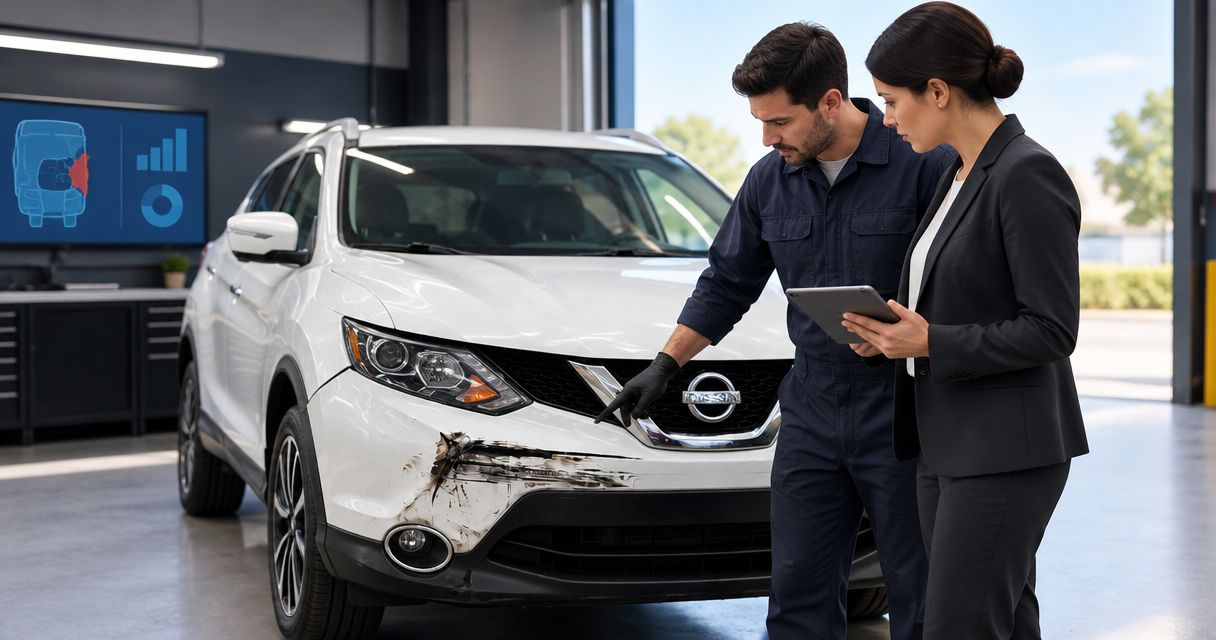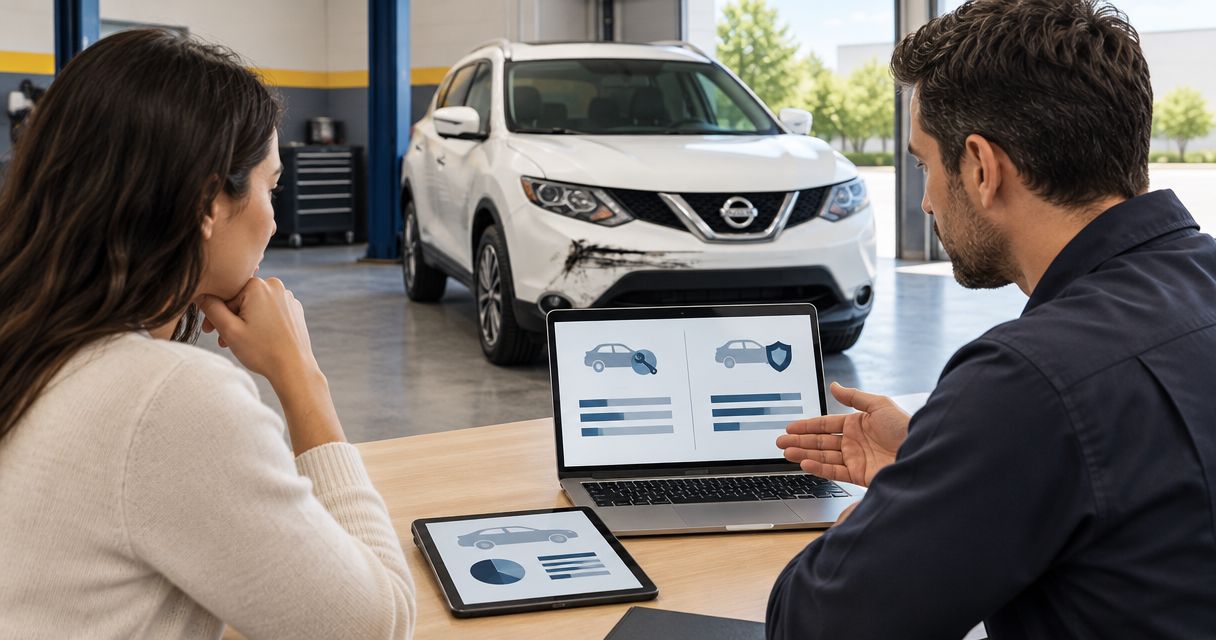
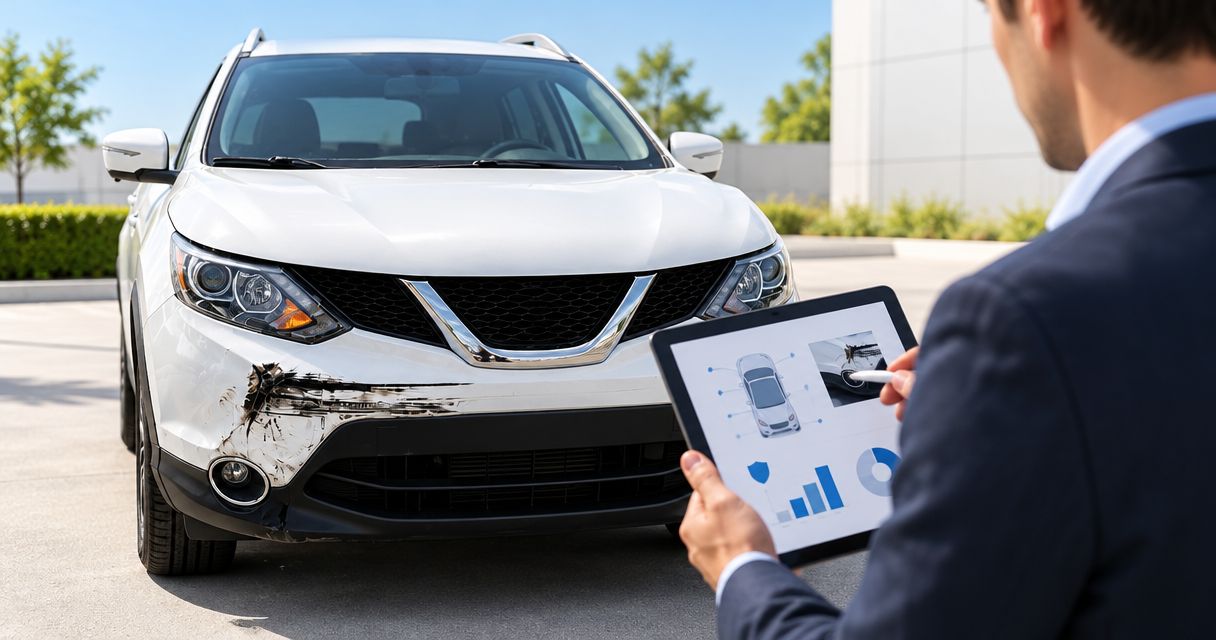
Insurance can pay for original equipment manufacturer (OEM), aftermarket, or recycled original parts in collision repair; your policy, the claim type, and the documented repair requirements determine what gets approved. An OEM-only repair is not automatic, and choosing original parts without written approval can leave you responsible for a difference the insurer does not cover.
- Insurance collision repair does not automatically include new OEM parts; check your policy and the written estimate.
- California requires covered non-OEM replacement crash parts to meet standards for kind, quality, safety, fit, and performance.
- Bestcollisionlb handles collision repair and insurance claims for Long Beach drivers; request a review before authorizing disputed parts.
- Separate your deductible from any unapproved parts upgrade, and get your responsibility in writing.
Does insurance pay for original or aftermarket collision parts?
Insurance can cover either, but the estimate is not the same thing as an OEM guarantee. Start with the policy language and the part listed on the estimate. For a Long Beach claim in 2026, California's claims rules also matter when an insurer specifies non-OEM replacement crash parts.
Bestcollisionlb is a fit for Long Beach drivers who want collision repair and insurance claim handling in one place.
| Parts option | Best for | Main advantage | Main limitation |
|---|---|---|---|
| New OEM parts | Repairs requiring an original manufacturer's replacement part | Matches the manufacturer's specified part when correctly selected | Insurance payment still depends on coverage and repair justification |
| Aftermarket parts | Repairs where a suitable non-OEM replacement meets applicable requirements | Provides an alternative replacement source | Suitability must be checked for the specific vehicle and repair |
| Recycled OEM parts | Repairs where a suitable used original part is permitted | Retains original-manufacturer origin | Condition, prior damage, and repair restrictions need review |
| Repairing the existing part | Damage that can be repaired under the applicable procedures | Keeps the existing component | Not appropriate when damage or repair instructions require replacement |
These are repair options, not a ranking of safety. An original part with the wrong application is not the right repair, and an aftermarket label alone does not establish that a part is unsuitable. The decision needs to fit your vehicle, its damage, and the applicable repair instructions.
Why this matters for Long Beach drivers
After an accident, a parts abbreviation can look like an insurance decision you have no say in. You can ask what the abbreviation means, why that part was selected, and whether the shop agrees it belongs in the repair. Get those answers before approving work that creates a disputed out-of-pocket obligation.
For your 2026 insurance collision repair, separate the repair question from the payment question. A shop can explain what the vehicle needs; the insurer decides coverage under the applicable policy and claim. When those answers differ, documentation gives everyone a specific issue to resolve.
New OEM parts: original does not mean automatically covered
New OEM parts come from the vehicle manufacturer's parts supply. They are different from a used original part, even though both have original-manufacturer origin. Ask the shop to identify whether an estimate means new OEM or recycled OEM rather than accepting the word original on its own.
New OEM parts are best for repairs where the applicable procedure or documented repair need calls for that replacement. A policy with an applicable OEM-parts endorsement can also affect payment. Read the endorsement's conditions rather than assuming it applies to every component or every claim.
The advantage is a clearly identified manufacturer replacement. The limitation is that your preference alone does not settle insurance coverage. If an insurer approves another suitable option, request a review before assuming an OEM substitution will be paid.
Aftermarket parts: suitability needs a specific review
Aftermarket parts are replacement parts supplied outside the vehicle manufacturer's original parts channel. The category includes different manufacturers and different components. Treating every aftermarket part as identical skips the question that matters: does this particular part meet the requirements of this repair?
Aftermarket parts are best for repairs where the specific replacement is suitable and meets applicable standards. Their advantage is an alternative source for replacement components. Their limitation is that the shop still needs to check the part's application, fit, and compatibility with the repair procedures.
For California claims, Title 10 of the California Code of Regulations, section 2695.8(g), addresses insurer-specified non-OEM replacement crash parts. It requires equivalence to OEM parts in kind, quality, safety, fit, and performance and addresses disclosure, identification, warranties, and necessary modifications. Those requirements do not mean every aftermarket part is automatically acceptable.
For a 2026 claim, ask the insurer and shop to identify the proposed part and explain how it meets those requirements. A specific concern about fit or performance is more useful than a blanket objection to the aftermarket label.
Recycled OEM parts: original, but not new
A recycled OEM part is an original-manufacturer part recovered from another vehicle. Its origin does not establish its current condition. The shop needs to evaluate the component, its suitability, and any restrictions in the applicable repair procedures.
Recycled OEM parts are best for repairs where a suitable used original component is permitted. Their advantage is original-manufacturer origin. Their limitation is that prior use, damage, corrosion, or an unsuitable application can rule out the individual part.
Do not treat a recycled body panel and a safety-system component as interchangeable decisions. Ask what inspection the proposed part needs and whether the repair instructions permit reuse. If the answer is no, the shop should document the reason rather than rely on a general preference for new parts.
Repairing the existing part: replacement is not always required
A damaged component does not always need replacement. Some cosmetic body damage can be repaired, while other damage or component-specific instructions require a replacement. The decision starts with inspection, not with the insurer's preferred parts category.
Repairing the existing part is best for damage that can be corrected under the applicable repair procedures. It keeps the existing component and avoids an unnecessary replacement. Its limitation is that appearance alone cannot establish whether repair is appropriate.
This applies to smaller body-repair enquiries as well as larger collision claims. You can request a self-pay estimate or an insurance review without assuming the damage is too minor to discuss. A clear estimate should explain what will be repaired, replaced, refinished, or inspected further.
Why insurance parts decisions vary
The answer changes with the claim and the vehicle, not just the name on the replacement part. For your 2026 repair, ask about these factors:
- Policy terms: Your own collision coverage and any applicable endorsements define contractual benefits and conditions.
- Claim type: A claim through your insurer and a claim against another driver's insurer have different payment frameworks.
- Repair instructions: Manufacturer procedures can establish component-specific repair, replacement, or reuse requirements.
- Part suitability: Vehicle application, condition, fit, and performance matter for the actual proposed component.
- Damage findings: Inspection can reveal damage that changes the original repair plan.
- Written approval: An approved repair item and a requested upgrade are different payment decisions.
An estimate written before disassembly does not always describe the complete repair. Read what hidden damage can raise a bumper repair estimate if the first estimate and the shop's findings differ. The useful next step is a documented supplement, not an assumption that either estimate is final.
How to review a parts dispute before repairs begin
Gather 3 documents: your policy or relevant endorsement, the insurer's estimate, and the shop's estimate. Keep them together so you can compare the proposed repair with the approved payment. For a third-party claim, use the insurer's written coverage or payment explanation in place of your own policy benefits.
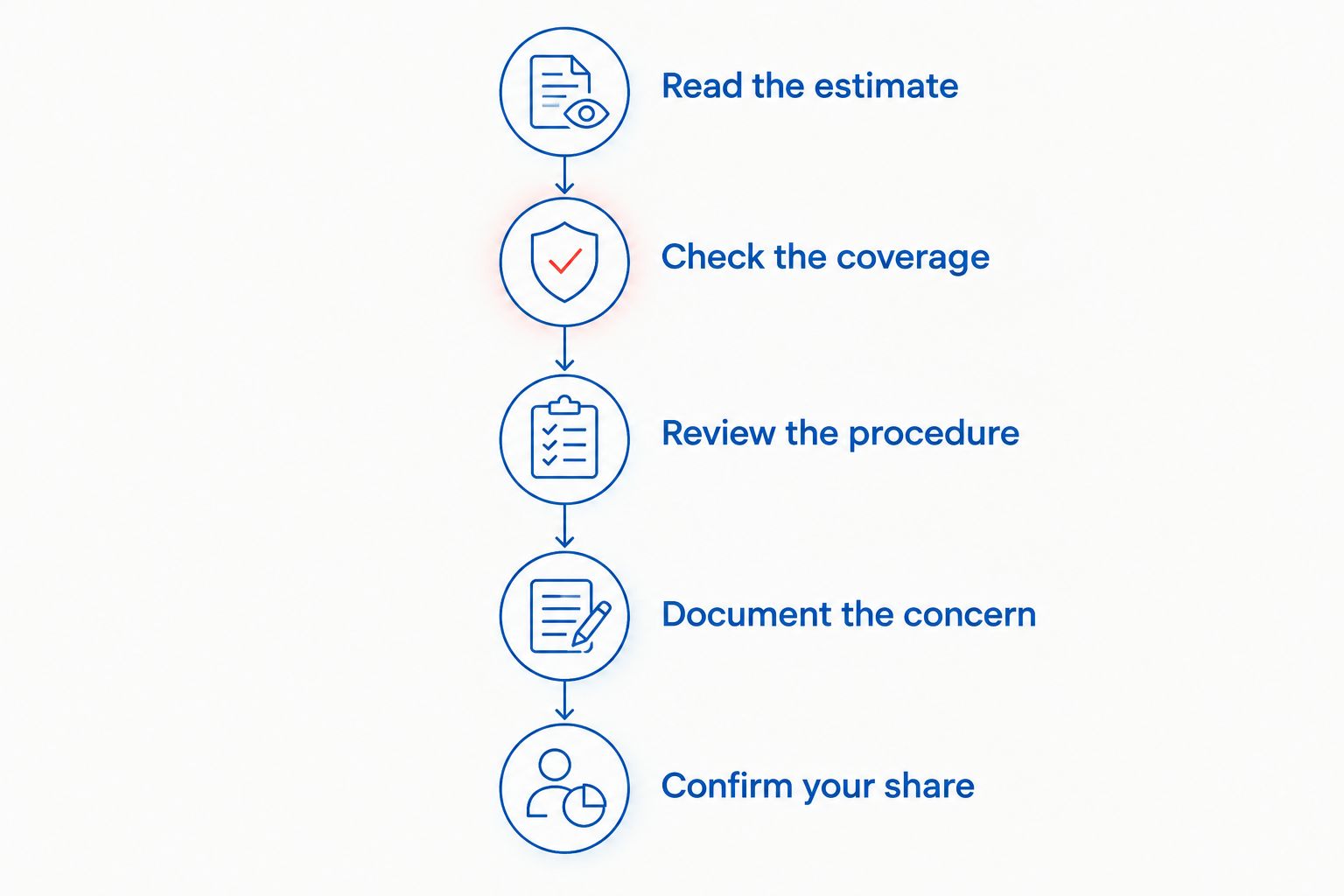
- Read the estimate. Identify which components are listed as new OEM, aftermarket, recycled, or repairable. Ask the shop to explain unfamiliar abbreviations.
- Check the coverage. Ask the insurer which policy term or claim decision supports the proposed payment. Request an explanation tied to the disputed item.
- Review the procedure. Ask the shop whether the replacement follows the applicable repair instructions. Have the shop identify a specific conflict if one exists.
- Document the concern. Use part identification, photos, fit findings, and relevant repair instructions. Ask the shop to submit the repair justification for review.
- Confirm your share. Get written approval or a written explanation of the amount you would owe before authorizing the disputed choice.
The sequence keeps a parts disagreement from becoming an unexpected bill. You do not need to argue technical details yourself; you need the shop and insurer to address the same documented repair issue.
Bestcollisionlb handles insurance claims alongside collision repair. Ask for a review of the parts estimate, the repair concern, and your possible out-of-pocket responsibility. That review is not a promise that the insurer will approve every requested part.
Request a parts estimate review
Discuss the proposed parts, insurance payment, and your out-of-pocket responsibility before approving repairs.
Can I insist on original parts for my insurance repair?
You can request original parts, but requesting them does not automatically make the insurer responsible for the difference. Check for an applicable OEM endorsement and ask the shop whether the repair requires the specific original component. Get the payment decision before authorizing a substitution.
Keep 2 decisions separate: which part belongs in the repair and who will pay for it. If the shop rejects a proposed alternative, ask for the technical reason in writing. If you prefer OEM without a documented repair requirement, ask the insurer to explain how it will handle that choice.
Are aftermarket collision parts unsafe?
An aftermarket label alone does not establish that a collision part is unsafe. Suitability depends on the individual component and repair, and California imposes requirements on insurer-specified non-OEM replacement crash parts. A poor fit, wrong application, or conflict with repair procedures deserves a specific review.
Ask the shop to explain any concern in plain language. The strongest question is not whether aftermarket parts are good or bad as a group; it is whether this part meets the requirements for your vehicle.
Will I owe more than my deductible for OEM parts?
You can owe an additional amount if you authorize a parts choice the insurer does not fully cover. That amount is separate from any applicable deductible. Do not approve an open-ended upgrade without a written explanation of your responsibility.
Keep 1 written record of the agreed out-of-pocket items before work proceeds. Bestcollisionlb offers deductible assistance and free rental car coordination subject to eligibility; call for a review of your situation. Neither service guarantees payment for an OEM upgrade or approval of the insurance claim.
FAQ
Does insurance collision repair always include original parts?
Insurance collision repair does not always include original parts. Coverage depends on policy terms, the claim type, and the documented repair requirements; an applicable OEM endorsement can affect the answer.
Can my insurance company specify aftermarket parts in California?
An insurer can specify non-OEM replacement crash parts subject to California's applicable claims requirements. California Code of Regulations, Title 10, section 2695.8(g), addresses equivalence in kind, quality, safety, fit, and performance, along with other obligations.
Are recycled OEM parts the same as new OEM parts?
Recycled OEM parts are used original-manufacturer parts, not new parts. Their condition, application, and permitted use need review before installation.
What should I do if the aftermarket part does not fit?
Ask the shop to document the fit problem and submit it to the insurer for review. The repair request should identify the component and explain the necessary correction rather than rely on a general objection to aftermarket parts.
Can I pay the difference to get original parts?
You can ask about paying a difference for original parts, but confirm the arrangement before authorizing work. Get a written explanation of what insurance approves and what you would owe.
Does choosing my own body shop guarantee OEM parts?
Choosing your own body shop does not guarantee insurance payment for OEM parts. Parts coverage and the technical repair requirements remain separate questions.
Can I ask for help with a smaller self-pay body repair?
Yes, you can request an estimate for a smaller or cosmetic self-pay body repair. Discuss repair and replacement options without assuming that an insurance claim is required.
Will deductible assistance cover an original-parts upgrade?
Deductible assistance does not automatically cover an original-parts upgrade. Assistance and free rental car coordination depend on eligibility, and any unapproved parts difference needs a separate review.
One last thing
Original describes a part's origin, not whether it is new. Before approving your 2026 repair estimate, ask whether each original component is new or recycled. That question prevents a common misunderstanding without turning the conversation into an argument.
If you are arranging collision repair in Long Beach, request an estimate or insurance claim review. Bring the insurer's estimate and ask which parts are proposed, why they fit the repair, and what you would owe. You can discuss an insurance-covered repair or a self-pay job without pressure.