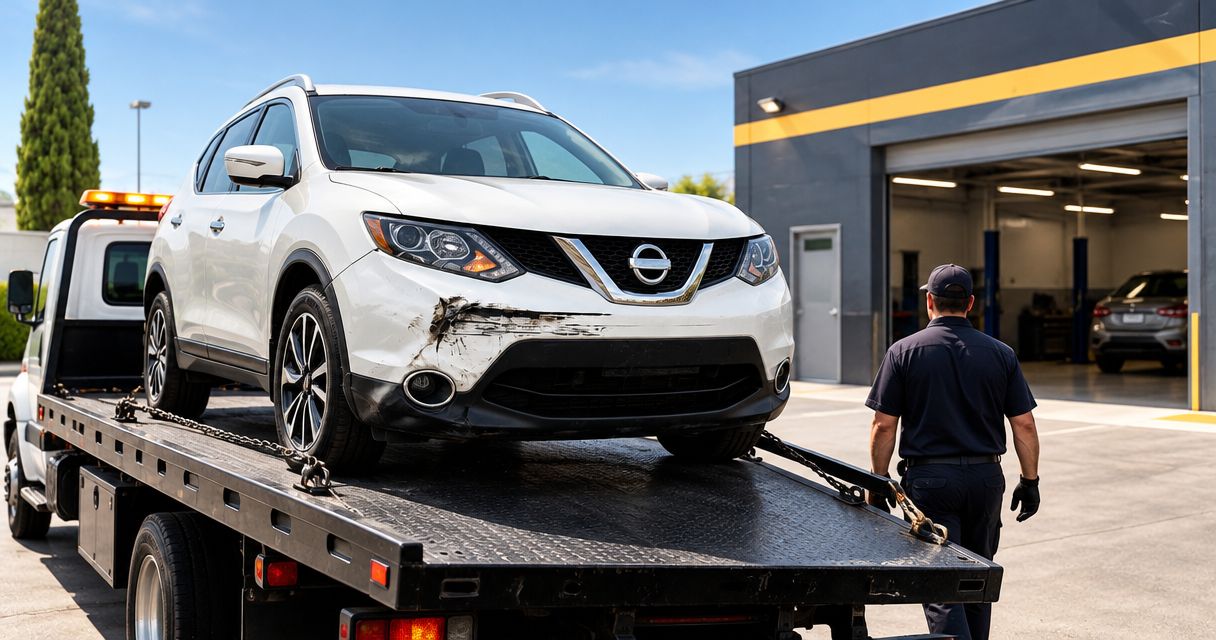

If the insurance estimate is lower than the body shop estimate, ask the shop to compare both estimates line by line and submit supporting documentation for any additional accident-related repairs. The difference is not automatically your bill: before you authorize work, confirm what the insurer has approved, what remains disputed, and what you would personally owe.
- A lower insurance collision repair estimate does not automatically make you responsible for the difference.
- Ask the body shop to document missing repairs and submit a supplement for insurer review.
- Keep your deductible separate from disputed repairs and work you choose outside the claim.
- Bestcollisionlb handles insurance collision repair and claim assistance for Long Beach drivers.
What if the insurance estimate is lower than the body shop estimate?
Treat the difference as a question about the repair plan, not a payment demand. An insurer's initial estimate and a shop's estimate can describe different work, parts, or repair procedures. You need to know exactly where they disagree.
Start with this comparison:
| Document | Best for | What it helps you understand | What it does not settle |
|---|---|---|---|
| Insurance estimate | Checking the insurer's initial repair assessment | Which repairs and amounts appear in the insurer's assessment | Whether additional damage or disputed work will be approved |
| Body shop estimate | Understanding the proposed repair plan | Which parts, labor, and procedures the shop proposes | What the insurer agrees to pay |
| Supplemental estimate | Requesting review of additional repairs | What the shop is adding or changing and why | Whether the insurer accepts every requested item |
Neither initial estimate answers every question. A shop estimate is not proof that every item is covered, and an insurance estimate is not proof that no other repair is needed.
For local help, Bestcollisionlb handles collision repair and insurance claims in the Long Beach area. Bring both estimates so the conversation starts with the actual disagreement, rather than the totals alone.
Why this matters
After an accident, a lower insurance estimate can sound like a decision that you must pay the balance. That conclusion skips an important step: reviewing why the estimates differ.
For your 2026 claim, keep the repair decision and the payment decision connected. You should understand both before signing an authorization. Ask the shop to distinguish requested work from approved work and explain any proposed customer responsibility in writing.
Do not choose between the two totals without comparing the work underneath them. A lower total can describe less work. A higher total can include items that still need explanation or a coverage decision.
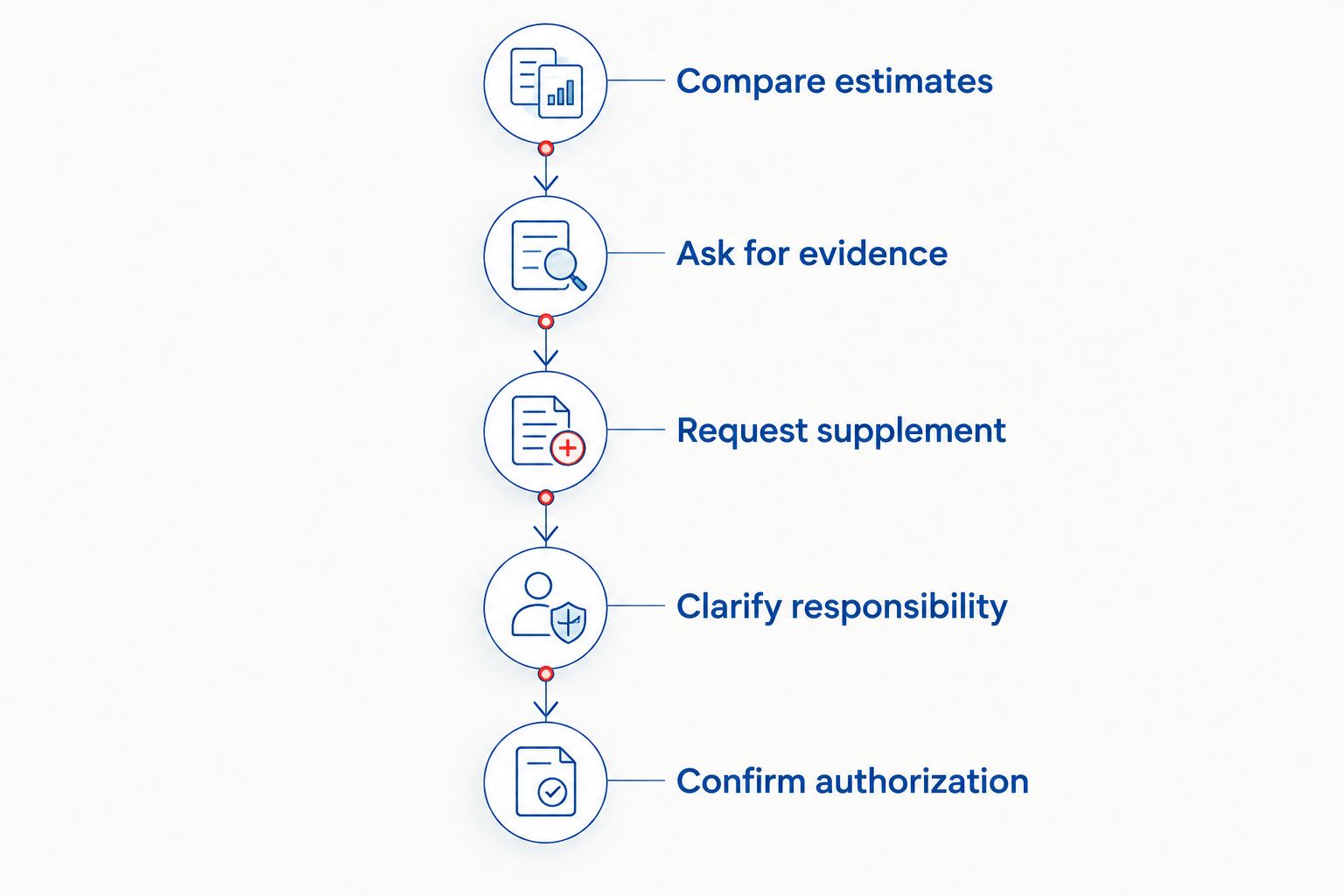
Follow these 5 steps before approving disputed work
1. Compare the estimates line by line
Give the shop a complete copy of the insurer's estimate, including any notes. Ask for a marked comparison showing items that are missing, different, or disputed.
A useful explanation names the repair operation. It does not stop at saying that the insurance company is too low. Ask whether the disagreement concerns repairing a panel, replacing a part, labor, paint work, or another procedure.
2. Ask for evidence
Request photographs and a plain-language explanation of the additional work. When the shop says a procedure is necessary, ask what supports that recommendation, such as the vehicle manufacturer's repair information.
Evidence should connect the requested work to your vehicle and the accident. You do not need to become a repair expert. You need a clear explanation that you and the claim representative can follow.
3. Request a supplement
A supplement is a request to revise the repair estimate. Ask whether the shop will submit it, what it includes, and whether the insurer needs to inspect the vehicle again.
Submission is not approval. Keep the insurer's response with your claim records, and ask the shop to explain which items were accepted and which remain unresolved.
4. Clarify your responsibility
Ask the shop to separate your deductible, any disputed repairs, and any work you requested outside the accident claim. These are different categories, even when they appear on the same invoice.
If the shop expects you to pay an unresolved amount, request that explanation before the work proceeds. Do not treat a verbal assurance as a substitute for a clear written payment agreement.
5. Confirm authorization
Ask what your signature authorizes and what happens if the insurer does not approve the requested supplement. Confirm whether additional work requires another conversation with you.
For a 2026 repair, save the estimate, authorization, supplement, and insurer response together. Keeping the current versions in one place makes it easier to see what changed.
Why the estimates differ
The difference needs an explanation, not a guess. Ask the shop and insurer to identify which of these issues applies to your claim:
- Damage visibility: An initial inspection can miss damage behind an exterior panel. Additional access can reveal repairs that were not included initially.
- Repair versus replacement: The estimates can disagree about whether a damaged part should be repaired or replaced. Ask for the reason behind each approach.
- Parts selection: Estimates can specify different types of replacement parts. Confirm what each estimate lists and what your policy addresses.
- Labor and paint operations: The estimates can include different labor rates, repair operations, or paint procedures. Ask which specific line items differ.
- Vehicle-specific procedures: Scans, calibrations, or other procedures need a vehicle-specific explanation. Ask what repair information supports the request.
- Coverage and accident scope: A disagreement can concern whether damage relates to this accident or falls within the claim, rather than whether the damage exists.
These are questions to investigate, not proof that your insurer or shop is wrong. The strongest next move is a documented comparison that separates repair needs from coverage decisions.
If the disagreement concerns damage behind a bumper, the guide to hidden damage that can raise a bumper repair estimate explains what to ask about beyond the visible surface.
Do I have to pay the difference between the estimates?
You do not automatically owe the difference just because the estimates disagree. Your responsibility depends on the coverage decision, your policy, and the work you authorize with the shop.
Ask for a written breakdown rather than a single balance. Your deductible is separate from a repair item the insurer has not accepted. Work you request outside the claim is another category.
Before approving a customer-paid item, ask:
- Is the insurer still reviewing it, or has it issued a decision?
- What repair evidence has been submitted?
- Does the shop expect me to pay if the insurer refuses?
- What does my authorization say about that situation?
You can also request a self-pay estimate for smaller or cosmetic body repairs. Asking about that option does not mean abandoning your claim. It gives you a separate repair proposal to consider without confusing it with approved insurance work.
Can the body shop ask insurance for a higher estimate?
A body shop can submit a supplemental estimate for the insurer to review. The request should explain the additional repairs and include supporting information. The insurer then decides what it accepts under the claim.
A useful supplement identifies the change. For example, it can explain newly visible damage or a repair procedure missing from the initial estimate. Simply resending a higher total does not explain why the additional work belongs in the repair plan.
Ask who is handling communication and whether anything is needed from you. If the insurer requests an inspection, clarification, or additional documents, find out what remains outstanding before assuming the review is complete.
For a 2026 claim, keep a dated record of supplement submissions and responses. This is a recordkeeping step, not a promise about approval or repair timing.
Should I authorize repairs while the estimate is disputed?
Authorize work only after you understand what is approved and what you could owe. If the shop proposes starting with agreed work, ask whether that work is separate from the unresolved items and how further approval will be handled.
Do not assume that signing a repair authorization guarantees insurance payment. The authorization concerns your agreement with the shop; the insurer's coverage decision is a separate issue.
Before leaving the vehicle, ask about inspection or disassembly authorization, reassembly, and any applicable storage terms. These questions matter if additional damage is found or the repair plan changes.
You do not have to decide under pressure. Request an explanation you can read and ask the shop to identify the decisions that genuinely need your approval now.
What should I do if the insurer rejects the supplement?
Ask for the reason in writing and share it with the shop. Find out whether the insurer disputes the repair need, the documentation, the accident connection, or coverage. Different disagreements need different responses.
The shop can then explain whether additional evidence addresses that reason. Ask the claim representative what review process is available under your policy and whether a supervisor can review an unresolved disagreement.
For California insurance questions in 2026, the California Department of Insurance provides consumer information and a complaint process. A complaint is a route for reviewing an insurance concern, not a guarantee that a particular repair item will be paid.
Do not authorize disputed work on the assumption that a later complaint will recover the money. Settle your understanding of the financial responsibility first.
Bring these 4 documents to your claim review
Bring the insurance estimate, the body shop estimate, accident photographs, and claim correspondence. Include the latest versions so the review does not focus on an estimate that has already changed.
Add your policy or coverage information if the disagreement involves your deductible or coverage. A claim number and the representative's contact details also help keep communication organized.
Bestcollisionlb is for Long Beach drivers who need insurance collision repair and claim-handling help. The shop also welcomes self-pay body repairs, including smaller and cosmetic work.
Deductible assistance and free rental car coordination depend on eligibility. Call for a review rather than assuming your deductible will be waived or that a rental car is included. Those options do not replace confirmation of what the insurer has approved.
Request an estimate or claim review
Get help reviewing the repair estimate, claim questions, and your potential out-of-pocket responsibility.
FAQ
What should I do first if insurance estimates less than the body shop?
Ask the shop to compare both estimates line by line and explain the difference. Request supporting documentation and find out whether a supplement has been submitted before authorizing disputed work.
Does a lower insurance estimate mean I must pay the balance?
A lower insurance estimate does not automatically make you responsible for the balance. Confirm the insurer's decision and your agreement with the shop, keeping your deductible separate from disputed repairs.
Can hidden damage change my insurance collision repair estimate?
Hidden damage can lead to a supplemental insurance collision repair estimate. Ask the shop to document the damage and explain which additional repairs it requires; insurer approval remains a separate decision.
Can I choose a Long Beach body shop that wrote a higher estimate?
A higher estimate does not by itself prevent you from choosing that shop. Before authorizing work, confirm how the shop will handle the disagreement and what it expects you to pay if items remain unapproved.
What if the shop and insurance company disagree about replacement parts?
Ask both parties to identify the proposed parts and explain the disagreement. Review the policy language and any vehicle-specific repair information supporting the shop's recommendation.
Is deductible assistance guaranteed for every collision repair?
Deductible assistance is not guaranteed for every collision repair. Eligibility must be reviewed, and you should not assume that your deductible is waived; free rental car coordination also depends on eligibility.
What records should I keep for a disputed repair estimate in 2026?
Keep both estimates, repair authorizations, supplements, photographs, and insurer responses for your 2026 claim. Save dated correspondence so you can distinguish requested repairs from approved repairs.
One last thing
A bigger insurance payment is not the only question. You also need a clear repair plan and a written understanding of your responsibility. An estimate can change without every change becoming approved work.
Before signing, ask these 3 questions: What is approved? What is still disputed? What would I owe if the insurer says no? Clear answers are more useful than reassurance about the total.
Related guides
- Compare auto body shops in Long Beach
- Understand repairs while an insurance claim is pending
- Check your vehicle after auto body repair in Long Beach
If you need help sorting out the difference, contact Bestcollisionlb to request an estimate or insurance claim review. Bring both estimates and ask about the repair plan, your out-of-pocket responsibility, and eligibility for deductible assistance or free rental car coordination.