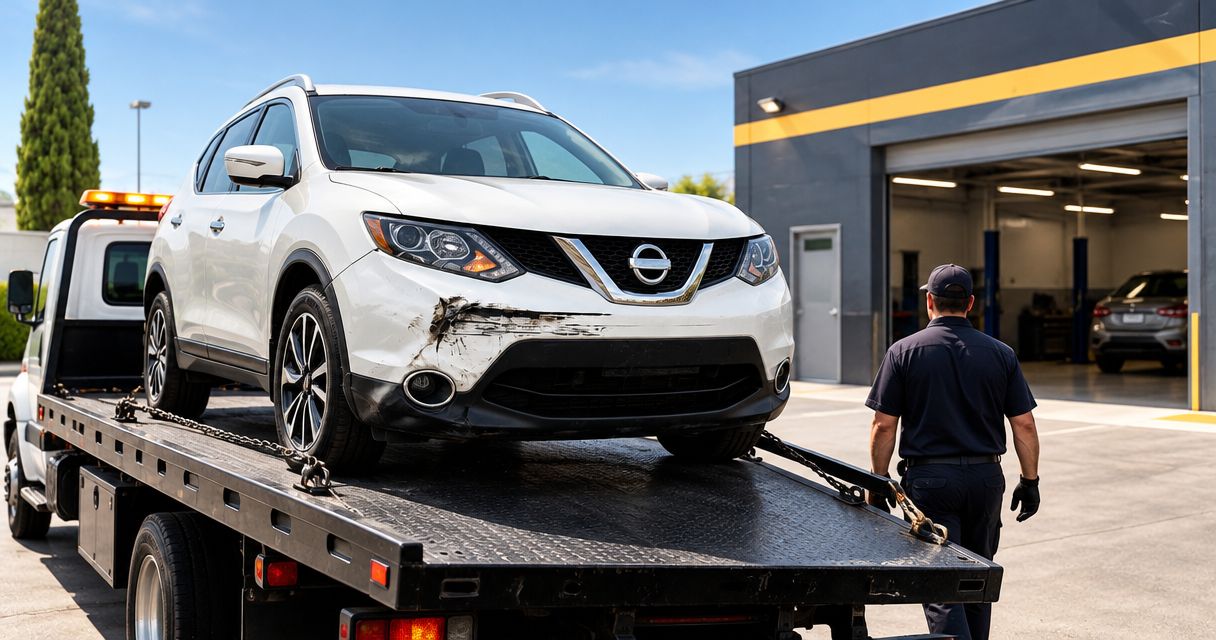

The insurer’s claims representative decides whether the insurance company will pay for extra collision repairs, while you authorize the shop to perform the additional work. When hidden accident damage appears, the shop documents it and submits a supplemental estimate; that request is not the same as payment approval, so confirm coverage and your responsibility before authorizing disputed work.
- Insurance collision repair involves separate decisions: the shop identifies damage, the insurer reviews payment, and you authorize repairs.
- A supplemental estimate documents accident damage that was not included in the original repair estimate.
- Best Collision Center Long Beach handles collision repair and insurance claims for Long Beach drivers.
- Ask about unresolved charges, your deductible, and rental coverage before approving additional work.
Who approves extra collision repairs after hidden damage is found?
The insurer approves covered payment. You approve the repair work. The shop explains what needs repair and why. Those are 3 separate decisions, even when the shop and claims representative communicate directly.
An initial estimate does not always capture damage behind exterior panels. Broken brackets, damaged wiring, or other concealed components can become visible during disassembly. The guide to hidden damage that can raise a bumper repair estimate explains why the repair plan can change after inspection.
| Person or organization | Main responsibility | What that responsibility does not mean |
|---|---|---|
| Repair shop | Identify damage, explain required work, and submit supporting documentation | Submitting a supplement does not guarantee insurer payment |
| Insurer’s claims representative | Review the supplemental estimate and decide what the insurer will pay under the claim | Payment approval does not replace your repair authorization |
| Vehicle owner | Authorize repairs and understand any personal payment responsibility | Your approval does not require the insurer to cover every charge |
For your 2026 insurance collision repair claim, ask for the supplemental estimate and the insurer’s response. Keep both with the original estimate. A conversation about approval is easier to follow when everyone is looking at the same repair items.
How the supplement process works
The usual process follows 5 steps. A disputed item can require further documentation before the payment decision is settled.
- Damage inspection: The shop identifies damage that was not visible or included in the initial estimate. Ask what changed and which part of the vehicle is affected.
- Supplement preparation: The shop lists the additional repair operations, parts, and supporting evidence. Photographs and applicable repair procedures help explain the request.
- Insurer review: The claims representative reviews the additional work. The insurer can request more information or another inspection before deciding what it will pay.
- Owner authorization: The shop explains the revised repair plan and any unresolved payment responsibility. You decide whether to authorize the additional work.
- Repair completion: The shop performs the authorized work. Compare the final repair documentation with the approved estimate and supplements before settling the bill.
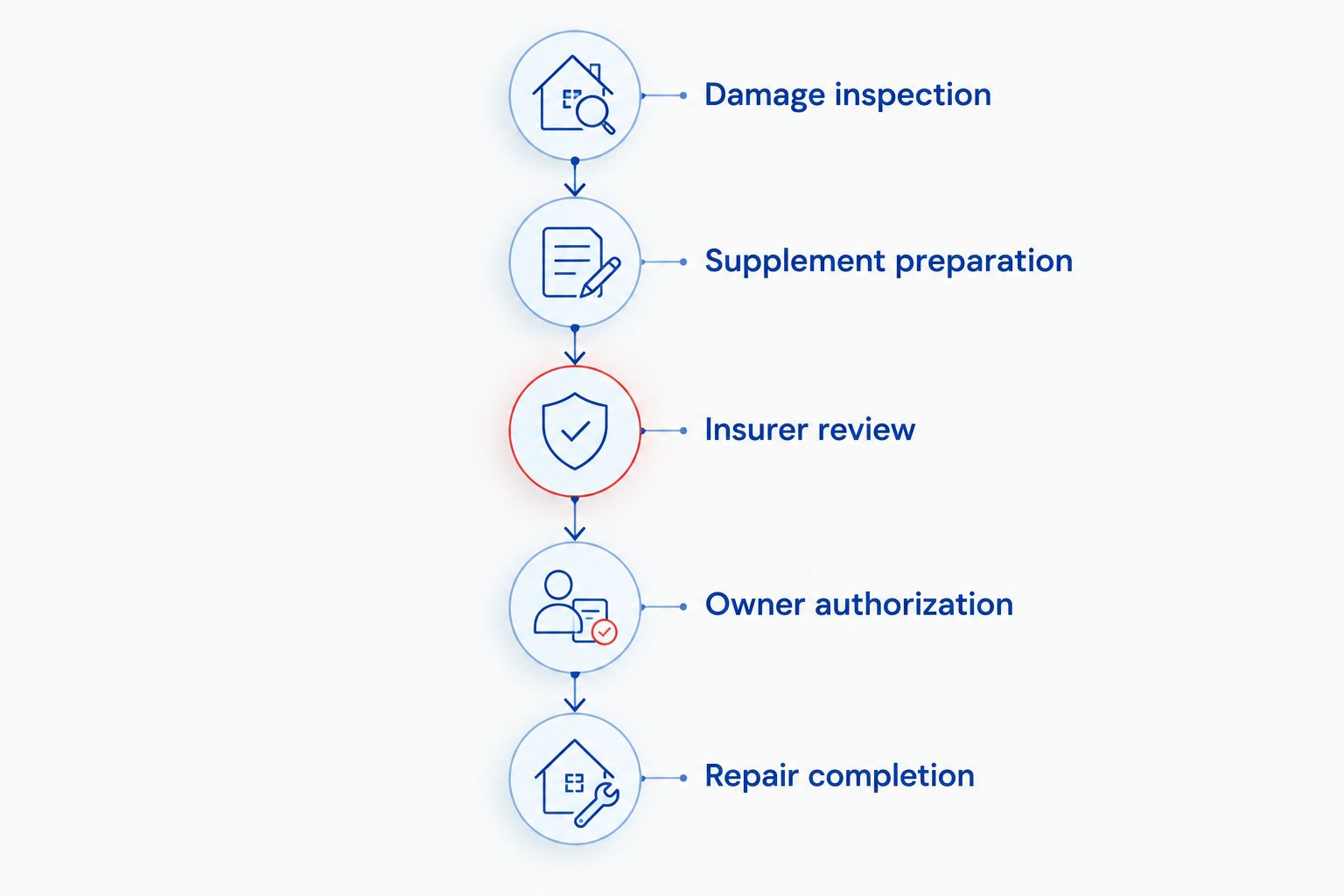
The sequence matters more than the word approved. Before work continues, find out which repair items have insurer payment approval and which still need your authorization. Do not assume that approval of the original estimate also covers newly discovered damage.
Why this matters for Long Beach drivers
After an accident, you need your car repaired without an unexpected bill. A supplement connects the damage found during disassembly to a revised repair plan, but it also creates a point where payment and authorization need clarification.
For a Long Beach driver arranging repairs in 2026, the useful question is not simply whether the claim is open. Ask whether the insurer has accepted the specific additional items, whether the shop has your authorization, and whether anything remains your responsibility.
Best Collision Center Long Beach is for Long Beach drivers who want collision repair and insurance claim handling together. That service addresses repair and claim coordination; it does not guarantee that an insurer will approve every requested item.
What belongs in a supplemental estimate?
A supplemental estimate should make the change understandable. You should be able to connect each added repair item to the newly identified damage rather than receive an unexplained revised total.
Ask the shop to walk you through these details:
- The new finding: What damage appeared, and why was it not included before?
- The repair operation: What additional work is required to address that damage?
- The evidence: Which photographs, inspection findings, or repair procedures support the request?
- The payment status: Has the insurer accepted the item, requested more information, or disputed it?
- Your authorization: What additional work are you being asked to approve?
Keep 2 estimate documents together: the original estimate and the supplemental estimate. If there are later revisions, keep those too. The documents give you a record of how the repair plan changed.
A higher estimate alone does not establish that the insurer owes every added charge. The additional work still needs to relate to the claim and meet the applicable coverage requirements. Ask the shop to separate accident-related repairs from unrelated maintenance or earlier damage.
Why approval of extra collision repairs varies
The payment decision depends on the damage, documentation, and claim terms. These factors explain why one supplemental item can be accepted while another needs further review:
- Connection to the accident: The insurer reviews whether the newly found damage resulted from the covered incident.
- Policy coverage: Coverage terms, exclusions, and applicable deductibles affect the payment decision.
- Documentation: Clear photographs and a specific explanation help establish what changed after the initial inspection.
- Repair requirements: The proposed operation needs support, including applicable manufacturer repair information where relevant.
- Disputed repair items: Differences over parts, labor, or repair operations need to be resolved item by item.
- The vehicle’s overall repair assessment: Additional damage can lead the insurer to reassess whether it will handle the vehicle as repairable or as a total loss.
For a 2026 claim, ask which factor is holding up the supplement. That gives you a specific next move: provide evidence, clarify coverage, or review the disputed repair operation. Asking only for a general status update does not identify the unresolved issue.
Does approving the supplement mean I owe nothing extra?
Supplement approval does not automatically remove your deductible or other personal payment responsibility. An insurer can agree to additional covered work while your policy deductible still applies.
A supplement to the same covered loss does not, by itself, create a separate accident claim. Ask your claims representative to confirm how the deductible applies and ask the shop to identify any charges outside the approved payment.
Get these points clarified before authorizing disputed work:
- Which added items has the insurer agreed to pay?
- Which items remain under review?
- Which charges, if any, would you pay yourself?
- Does your authorization include any work that the insurer has not accepted?
Best Collision Center Long Beach offers deductible assistance and free rental car coordination subject to eligibility. Call for a review of your circumstances; neither service means every deductible is waived or every customer receives a free rental car.
Can the shop start extra repairs before insurance approves them?
Your repair authorization and the insurer’s payment decision are separate. Authorizing additional work before payment is settled can leave you responsible for charges the insurer does not cover.
California’s Bureau of Automotive Repair guidance distinguishes repair estimates from customer authorization. For your vehicle, ask the shop how it will document any additional authorization and explain changes to the agreed repair scope.
If you are considering proceeding before the claim decision, read whether you can repair your car while an insurance claim is pending. The practical issue is knowing what you are approving and who will pay, not just whether the vehicle is already at the shop.
Which payment approach fits your situation?
These are payment choices, not different standards for repair quality. Choose based on the claim status and the responsibility you are willing to accept.
| Approach | Best for | Benefit | Limitation |
|---|---|---|---|
| Insurer-reviewed supplement | Drivers seeking payment for additional covered accident damage | Lets the insurer review the added work before payment responsibility is settled | Review does not guarantee acceptance of every item |
| Self-pay additional repairs | Drivers choosing to pay for work outside the insurance payment | Separates your repair decision from the insurer’s coverage decision | You accept the agreed charges yourself |
Smaller body repairs and cosmetic damage also deserve an estimate. If you choose self-pay repairs, ask for a clear scope and authorization rather than treating the insurance estimate as the only available repair plan.
What should I do if the insurer rejects the extra repairs?
Ask for the disputed items and the reason for each payment decision. A general statement that the supplement was rejected does not tell you whether the issue is coverage, accident causation, documentation, or the proposed repair method.
Start with the shop’s explanation. Ask it to connect the rejected item to the damage and the applicable repair procedure. Then ask the claims representative what evidence would address the disagreement.
Keep the disagreement focused on the repair item rather than a broad argument about the claim. Save the revised estimate, photographs, insurer messages, and any written explanation of the decision. Those records make a request for further review easier to understand.
If the insurer maintains its position, request an explanation of the available claim review process. California drivers with unresolved insurance concerns can also seek guidance from the California Department of Insurance. That does not replace repair authorization or guarantee a different claim outcome.
What changes when hidden damage affects the repair schedule?
New damage can change the repair plan, parts requirements, and completion schedule. Ask the shop what remains unresolved rather than treating the original completion estimate as unchanged.
For your 2026 repair, separate the questions: Is the shop waiting for insurer review, parts, authorization, or repair work? A specific answer helps you plan transportation without assuming that an insurance decision and repair completion happen together.
Rental coverage needs its own check. Ask the insurer about your policy’s rental terms and ask the shop about coordination options. Extra repair work does not automatically extend rental benefits or make every transportation expense covered.
FAQ
Who approves a supplement for insurance collision repair?
The insurer’s claims representative decides what the insurer will pay for the supplement, and you authorize the additional repair work. The shop documents the hidden damage and explains the revised repair plan.
Do I have to approve extra repairs after the shop finds hidden damage?
You need to understand and authorize the additional repair work before it proceeds. Ask the shop to explain the revised scope, how authorization will be recorded, and any unresolved payment responsibility.
Does a supplemental estimate mean my insurance company has approved it?
A supplemental estimate is a request for additional payment, not proof of insurer approval. Ask which specific items have been accepted and which remain under review.
Will I owe another deductible when hidden damage is found?
A supplement to the same covered loss does not, by itself, create a separate accident claim. Ask the claims representative to confirm the deductible treatment and the shop to explain any other personal charges.
Can I pay for extra body repairs myself instead of waiting for insurance?
You can choose self-pay body repairs after agreeing to the repair scope and charges. Your decision to proceed does not require the insurer to reimburse work it has not accepted.
Does insurance pay for a rental car while the supplement is reviewed?
Rental payment depends on the applicable coverage and benefit terms, not simply on whether a supplement is pending. Confirm those terms with the insurer before assuming additional rental time is covered.
What should I keep for a collision repair claim in 2026?
Keep the original estimate, supplemental estimates, damage photographs, repair authorizations, and insurer correspondence for your 2026 claim. Together, they show what changed, what you approved, and what the insurer agreed to pay.
One last thing
Ask what approved means before treating it as permission to proceed. It can refer to insurer payment, your repair authorization, or only part of the supplemental estimate. Request the specific items and any remaining personal responsibility.
Keep that distinction in your 2026 claim notes. It is more useful than a vague assurance that everything is being handled.
Related guides
- How long does collision repair take in Long Beach?
- Can a car declared a total loss still be repaired?
- What should you check after auto body repair in Long Beach?
You do not need to sort out the repair and claim questions alone. Contact Best Collision Center Long Beach to request a collision repair estimate or an insurance claim review, including self-pay, smaller, and cosmetic body repairs.
Request an estimate or claim review
Discuss hidden damage, repair authorization, and eligibility for deductible assistance or free rental coordination.