The insurance check for collision repairs goes to whoever the insurer names as the payee: you, the body shop, or you together with a lender or repair shop. The recipient depends on the claim, vehicle ownership, and payment arrangements. Receiving the check does not automatically mean you can spend it freely, especially when a lender or another payee is named.
- Insurance collision repair checks can name the driver, body shop, or lender; read the payee line before depositing.
- Joint checks require the named payees’ endorsements or the bank’s approved processing procedure.
- Best Collision Center Long Beach handles collision repair and insurance claims for Long Beach accident victims.
- Confirm your deductible, repair authorization, and payment instructions before work begins.
Who gets the insurance check for collision repairs?
The name on the check determines who can receive or endorse the payment. Your vehicle’s financing agreement and the insurer’s payment instructions determine what happens next. For an electronic payment, check the payment notice and designated recipient instead.
Use this table to identify your next step. These are payment arrangements, not promises that your insurer will use a particular method.
| Payment arrangement | When it applies | Main advantage | What to check |
|---|---|---|---|
| Check payable to you | The insurer issues payment in your name alone | You can direct payment toward the repairs | Loan or lease obligations still apply |
| Check payable to the body shop | The insurer pays the repair facility directly | You do not have to pass that payment along | Confirm what the payment covers and what remains your responsibility |
| Check payable to you and the body shop | The insurer names both parties | Both parties participate in processing the payment | Ask how the shop and bank handle endorsement |
| Check payable to you and your lender | The insurer includes the vehicle’s lienholder | The lender participates in protecting its interest in the vehicle | Obtain the lender’s release or endorsement instructions |
| Electronic payment | The insurer transfers money to a designated recipient | There is no paper check to process | Verify the recipient, claim reference, and payment explanation |
Why this matters for Long Beach drivers
After an accident, you need your car repaired—not another payment problem. A check with an unexpected lender’s name can interrupt your plans if you assume it works like an ordinary personal check. A payment sent straight to a shop can also leave you unsure whether your deductible is still due.
Best Collision Center Long Beach is a fit for Long Beach drivers who want collision repair and insurance claim handling together. You can request a repair estimate or claim review through Best Collision Center Long Beach. Deductible assistance and free rental car coordination are subject to eligibility; ask for a review rather than assuming either applies.
For a 2026 claim, keep the payment explanation with your estimate. Together, they help you distinguish the approved repair work from the payment already issued.
If the insurance check is payable only to you
A check naming only you generally lets you process the payment without another payee’s endorsement. That does not erase the conditions of your policy, your loan agreement, or your repair authorization. Read those documents before treating the payment as money available for other expenses.
If you own the vehicle outright, ask the insurer what obligations remain if you delay or decline repairs. Keep a record of existing damage. Leaving damage unrepaired can complicate a later claim involving the same area because the insurer needs to distinguish old damage from new damage.
Receiving payment also does not establish that the vehicle is safe to drive. A damaged bumper, wheel area, light, or panel needs assessment based on the actual damage—not the fact that an insurer issued money.
Keep the repair funds separate until you understand the repair scope and your obligations. That makes it easier to pay the shop and track any later claim payments without confusing them with everyday spending.
If the insurance payment goes directly to the body shop
Direct payment means the insurer sends the approved repair payment to the repair facility. It does not mean every repair item is approved, every balance is covered, or your deductible disappears. Ask the shop to explain the payment against the estimate.
Before authorizing work, confirm whether the shop expects direct insurance payment or payment from you. Also confirm how the shop handles additional damage discovered during repairs. Clear payment instructions protect you from assuming that someone else has already settled an outstanding balance.
At pickup, review the final invoice and the payments credited to the repair. You should understand which payments came from the insurer, which came from you, and whether an unresolved balance remains.
For a 2026 repair, save the final invoice alongside the insurer’s payment notice. A payment notice explains the insurer’s payment; the final invoice explains the completed repair charges. Neither document replaces the other.
If the check names you and another payee
A jointly payable check requires attention before you deposit it. When a check names you and another party, the wording between the names affects how the bank processes it. Ask the bank to confirm its endorsement requirements rather than guessing from the printed names.
If the other payee is your lender, contact the lender’s insurance-loss department or customer service team. Ask for its written procedure. Lenders can require repair documentation before releasing funds, so establish that process before you promise payment to the shop.
If the other payee is the body shop, ask how it handles jointly payable checks. Do not sign a check in advance without understanding where the money will go and how it will be credited to your repair.
A lease adds another document to check: the lease agreement. The vehicle’s owner can have repair requirements separate from the insurer’s payment process. Check endorsement and repair obligations are related, but they are not the same question.
Why the insurance check recipient varies
The payee is not chosen solely by which driver caused the accident. These factors affect who receives payment and what you need to do with it:
- Vehicle ownership: An owned, financed, or leased vehicle comes with different ownership interests and contractual obligations.
- Claim type: A claim under your own policy follows that policy’s terms. A claim against another driver involves that insurer’s liability decision and payment process.
- Payment authorization: Your arrangements with the insurer and repair facility affect whether payment goes to you or directly to the shop.
- Lender requirements: A lienholder can be included in payment and require documentation before releasing repair funds.
- Repair stage: An initial payment and a later payment for approved additional damage do not necessarily follow identical instructions.
For your 2026 claim, ask who will receive each payment—not just the initial check. This matters when the insurer issues an additional payment after the shop documents damage that was not visible during the first inspection.
What should you do when the insurance check arrives?
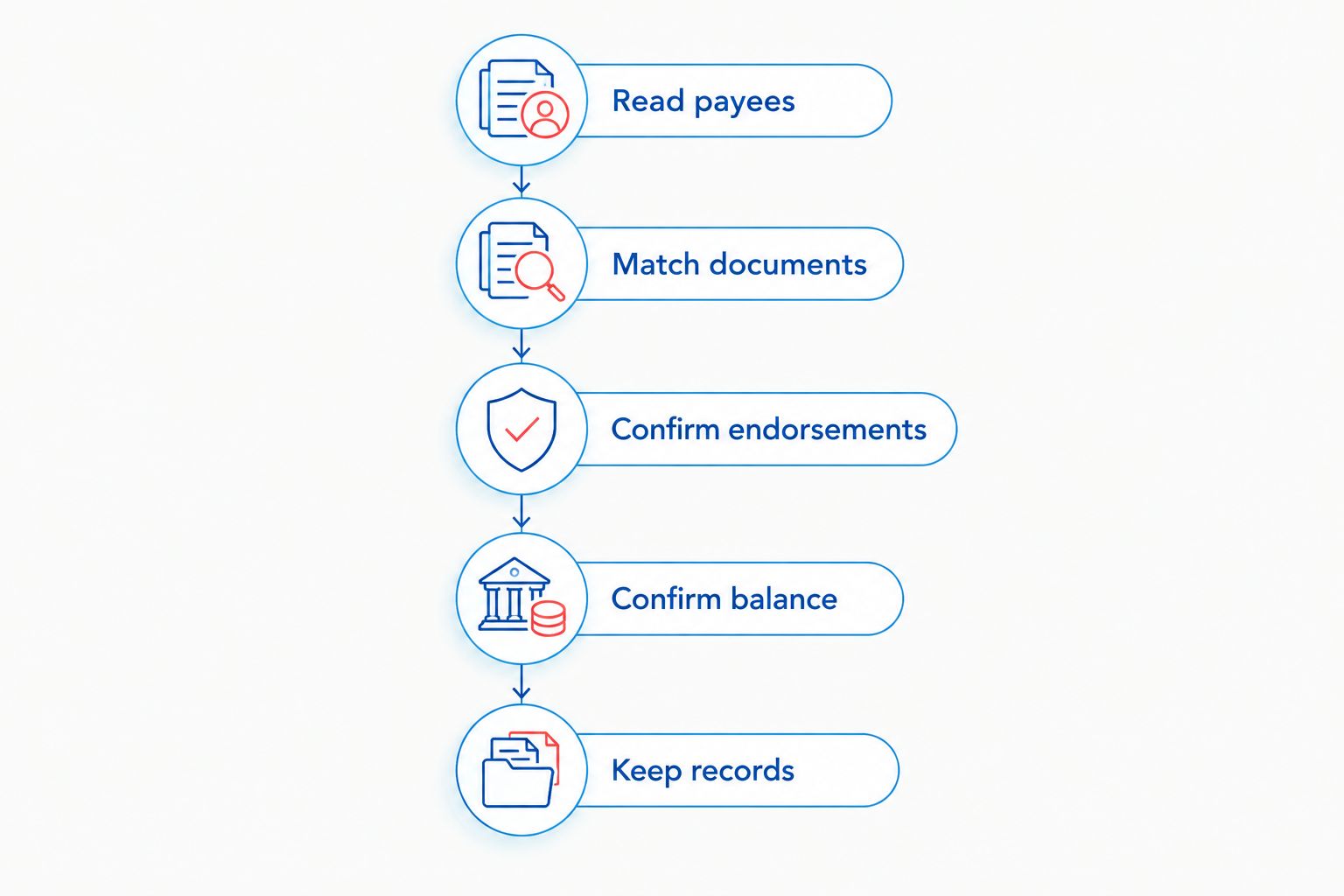
Follow this sequence before depositing the check or signing it over. If you received an electronic payment, use the payment notice for the same checks.
- Read payees. Match every name to the driver, shop, lender, or other party involved. Ask the insurer to correct an error rather than trying to work around it.
- Match documents. Compare the payment explanation with the insurer’s estimate and claim reference. Determine whether the payment covers the initial estimate or approved additional work.
- Confirm endorsements. Ask the bank and any joint payee how to process the check. Get lender instructions before sending documents or signing anything.
- Confirm balance. Ask the repair shop what remains your responsibility, including your deductible and any work outside the approved claim.
- Keep records. Save the check information, payment notice, repair authorization, and final invoice. Record who received the funds and how they were applied.
If the payee is wrong, contact the claims representative before depositing the payment. Explain the specific error and ask for corrected payment instructions. A shop can help you understand the repair paperwork, but the insurer must resolve an error in the payment it issued.
Does getting an insurance check mean repairs are fully approved?
An insurance check confirms a payment, not blanket approval of every repair. Read the estimate and payment explanation to see which work the insurer included. Damage found after disassembly can require a separate request for approval and payment.
That additional request is commonly called a supplement. The shop documents the newly identified damage and submits the additional repair items for insurer review. Do not assume the first check represents the final repair amount.
For a 2026 claim, ask how approved supplemental payments will reach the shop. This is especially useful when the initial payment went to you but later work is being handled directly between the shop and insurer.
Also distinguish a repair payment from a total-loss settlement. A total-loss claim follows a different settlement process, including any lender balance. If the insurer changes the claim to a total loss, ask for updated instructions before using the earlier payment.
Do I still pay a deductible if the shop gets the check?
Direct payment to the shop does not remove a deductible that applies to your claim. The insurer’s payment can reflect the covered repair amount after the applicable deductible. Ask the insurer and shop to explain your responsibility before authorizing repairs.
A claim against another driver’s liability insurance is different from using your own collision coverage. If you use your own coverage first, ask your insurer about deductible recovery and how it will notify you of any reimbursement. Do not count on reimbursement before the insurer confirms it.
Deductible assistance is also separate from insurer payment. Eligibility must be reviewed; assistance is not an automatic waiver. The same caution applies to rental arrangements: repair payment alone does not establish rental coverage or eligibility for a free rental car.
Can I choose a Long Beach body shop if the insurer sends me a check?
California drivers have the right to choose their repair shop. Receiving a check does not, by itself, require you to use a shop suggested by the insurer. Shop choice still leaves the repair scope, payment arrangements, and any differences between estimates to resolve.
Before work starts, ask your chosen shop to compare the insurer’s estimate with its repair plan. Get a clear explanation of disputed items and your authorization options. Choosing a shop and approving an out-of-pocket repair balance are separate decisions.
For a 2026 repair, judge the payment process by clarity: you should know who gets paid, what work is approved, and what you are authorizing. You do not need to understand every claims term to ask those questions.
FAQ
Who gets the insurance check if my car is financed?
The insurer can name you and your lender together on the repair check. Contact the lender for its endorsement and repair-documentation instructions before attempting to deposit it.
Can the insurance company pay the body shop directly?
Yes, an insurer can pay the body shop directly under the claim’s payment arrangements. Confirm what the payment covers and whether a deductible or other authorized balance remains your responsibility.
Can I cash an insurance check with my lender’s name on it?
Do not treat a check naming your lender as a check payable only to you. Ask your bank and lender for the required endorsement and release procedure.
Can I keep the insurance money instead of repairing my car?
Whether you can retain the money without repairing the vehicle depends on ownership, financing or lease obligations, and claim terms. Confirm those obligations first; payment does not establish that the damaged vehicle is safe to drive.
Does the first insurance check cover hidden collision damage?
The first insurance check covers the repair items reflected in its payment explanation, not automatically every hidden repair. Newly discovered damage can require documentation, insurer review, and a supplemental payment.
Do I still owe my deductible when insurance pays the shop?
An applicable deductible remains your responsibility unless a separate arrangement addresses it. Direct insurer payment to a shop is not a deductible waiver.
Can Best Collision Center Long Beach help with insurance collision repair?
Best Collision Center Long Beach handles insurance collision repair and claim handling for Long Beach accident victims. Request an estimate or claim review, and ask whether you qualify for deductible assistance or free rental car coordination.
One last thing
A deposited check does not close every repair question. Before moving the money, ask: What does this payment cover, who must endorse it, and what balance remains mine? Those answers are more useful than assuming the check settles everything.
Keep a copy of the payment explanation even after the repair is complete. If another payment arrives, that record helps you identify whether it belongs to additional repair work or another part of the claim.
Related guides
- What if the insurance estimate is lower than the body shop estimate?
- Can you repair your car while an insurance claim is pending?
- Who approves extra collision repairs after hidden damage is found?
- How to compare auto body shops in Long Beach
If you are unsure who should receive your check, request an estimate or insurance claim review from Best Collision Center Long Beach. Insurance-covered and self-pay body repairs are welcome, including smaller cosmetic repairs. Ask about deductible assistance and free rental car coordination; eligibility determines what applies to your situation.